
Work Begins on €1.67 Million Housing Renovation Project in Santa Cruz de Tenerife
Construction has commenced on the 1.67 million euro Añaza I-10 housing project in Santa Cruz de Tenerife, which aims to improve energy efficiency and accessibility for 88 homes using European Union funding.
Work has officially begun on the Añaza I-10 housing project in Santa Cruz de Tenerife, marking a major step forward in the city’s urban renewal efforts. This project will upgrade 88 homes, focusing on sustainability and modern functionality. It is part of a larger strategy that has already improved over 700 homes across the municipality.
The project, managed by the construction firm Fachadas Dimurol S.L., has a budget of approximately 1.67 million euros and is expected to take eight months to complete. The funding is primarily provided by the European Union’s Next Generation funds, supported by an additional contribution from the regional government.
The renovations focus on three main areas: energy efficiency, facility upgrades, and improved accessibility. Key improvements include:
- Energy Efficiency: Replacing old water heaters with aerothermal systems, which use air-source heat pumps to reduce reliance on fossil fuels.
- Insulation: Installing new PVC frames in utility rooms to improve thermal and acoustic insulation.
- Accessibility: Installing an elevator in Block D to help bring older buildings up to modern mobility standards.
These upgrades go beyond simple aesthetics. By improving insulation and energy systems, the project helps lower electricity bills for families and addresses energy poverty, all while supporting the European Union’s climate goals.
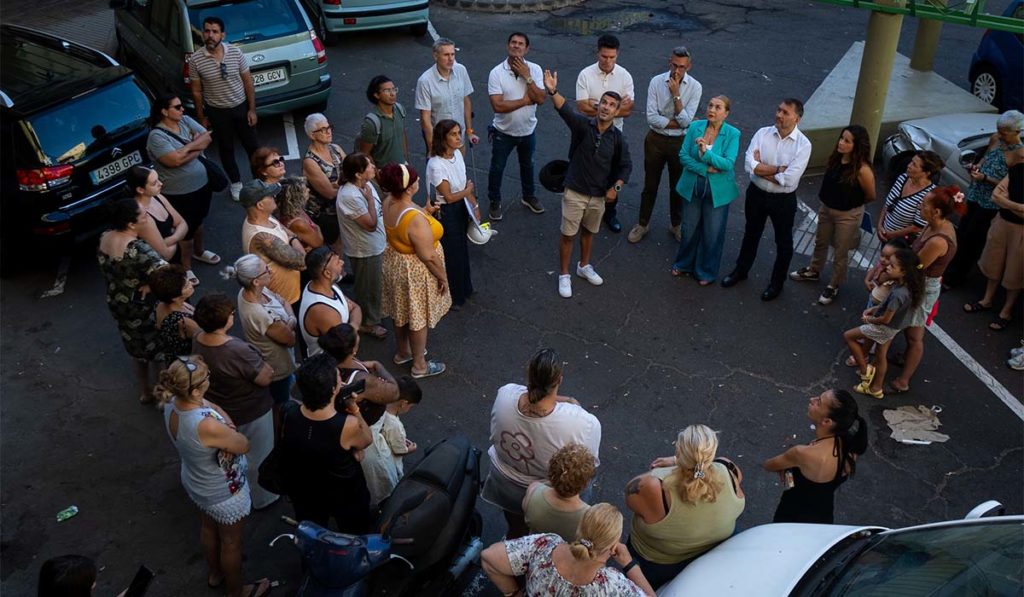
During a recent meeting, Icavi director Pino de León and Mayor José Manuel Bermúdez highlighted that these renovations are vital for both preserving public housing and improving the quality of life for residents. The Añaza I-10 project reflects a broader institutional commitment to making older neighborhoods more comfortable, sustainable, and accessible for the 21st century.