
Vicky Palma: Recklessness Fuels 57 Canary Islands Sea Deaths
Former weather presenter Vicky Palma, now a 112 emergency service risk assessor, warns that public recklessness and a lack of understanding of groundswells are major factors in the 57 sea deaths recorded this year in the Canary Islands, while also addressing climate change impacts.
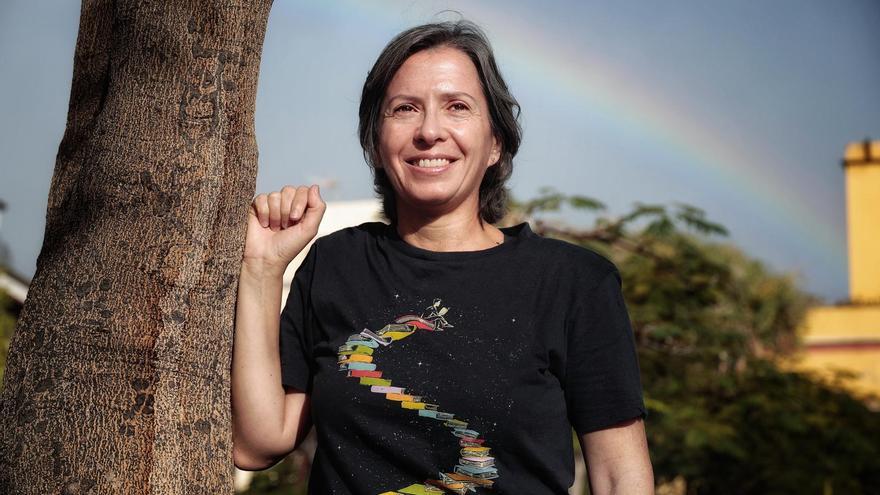
Vicky Palma, once the familiar face of weather reports on Televisión Canaria, now works for the 112 emergency service. After a short time at the Cabildo de Tenerife, her role is to assess weather risks during severe weather events. She is worried about the 57 deaths at sea this year, with 22 of those happening on Tenerife.
She believes the incident was reckless. The natural pool area had been fenced off and closed for days, with clear warnings against entering. The sea might have looked calm because there was no wind; usually, strong winds make the sea choppier. However, the danger of a groundswell isn't obvious. A groundswell brings waves to the shore, some small, others very large, and it's hard to predict when they will break. Witnesses said the incident happened at high tide, when a series of long waves completely covered the pool and swept people away.
Government figures show 57 deaths at sea so far this year. Other statistics, like those for the Canary Islands with its 1,500 kilometers of coastline, count slightly more, but these include swimming pool deaths. The Canary Islands Government website, infoplayascanarias.es, tracks fatal sea incidents. This year has seen 57 deaths, compared to 65 last year. This year, Tenerife has the highest number with 22 deaths, followed by Gran Canaria with 13, Lanzarote with 10, and the remaining on other islands. When asked what can be done, Palma isn't sure. Many local councils have put measures in place in bathing areas, following the Coastal Decree. This includes multi-language information and flags on beaches. Yet, even with lifeguards, red flags, and clear signs, people often ignore them. For instance, local police in Santiago del Teide had arguments with swimmers the day before the incident, trying to clear people from the Isla Cangrejo tidal pool. Palma believes there's a lack of common sense, perhaps a significant one.
She feels a lack of common sense often combines with recklessness. While hotels receive alerts, there's a push for more information at dangerous spots and on screens in hotels, highlighting safety advice. This is crucial because some areas are simply not safe for swimming. Palma thinks visitors don't understand how dangerous the Atlantic sea can be when it's rough, due to its unpredictable and complex nature. They aren't aware of the risks in such a challenging coastal environment. For example, in Garachico, where a terrible sea is expected this alert weekend, houses are built with doors higher up and no ground-floor windows, only on upper floors. This is because the sea hits the area with immense force, and historically, people built entrances at the back of their homes to avoid this impact.
Palma believes a rough sea can be captivating, but people shouldn't put themselves in danger or get too close. Its power can be enjoyed safely from a distance. She notes that social media encourages risky photo-taking, with Instagrammers often venturing into dangerous spots where waves break to get the perfect shot. The ultimate consequence in such situations can be losing one's life.
Regarding fires, Palma thinks the approach to forest management in Spain needs to change. Over recent decades, forests have grown denser, and a policy of "overprotection" might have been misguided. Now, mountains are heavily loaded with fuel, and nearby land has been left untended. She explains that a fire, like the one in Tenerife in 2023, created its own unique environmental conditions. It wasn't just the atmosphere; the fire itself generated so much energy that it altered the surrounding environment.
Palma clarifies that during the week of the Los Gigantes incident, the State Meteorological Agency (Aemet) issued no warnings about sea conditions. This is because Aemet's coastal reports are for shipping, not for beachgoers. Similarly, warnings about dust haze used to be only for air traffic, due to poor visibility for planes. However, in the Canary Islands, dust hazes worsen respiratory illnesses, increasing hospital visits. So, the Canarian Health Service (SCS) now receives pre-alerts. She also notes that the Canary Islands have excellent rescue services, better than many places in Europe, partly due to their rapid response. For example, in Los Gigantes last Sunday, three helicopters were deployed in just fifteen minutes. Palma concludes that prevention and taking measures before an accident are far easier and cheaper than reacting afterwards.
Palma suggests that even locals have started believing the "eternal spring" advertising slogan. Yet, in winter, some areas of Tenerife and other islands can get very cold, sometimes more so than parts of mainland Spain, due to the mix of temperature and humidity. She says while there's clear evidence of climate change on the islands, she doesn't see an increase in extreme weather events. In fact, she thinks there have been fewer in recent years. Between 2000 and 2012, there were major events like the Santa Cruz flood in March 2002 or Tropical Storm Delta in 2005. But since 2012, extreme weather has been more localized, affecting only specific spots rather than entire islands. What is noticeable, however, is that heatwaves are lasting longer, with significantly high temperatures. Homes aren't built for these heat extremes, and air conditioning is uncommon. Palma believes they need to adapt to this new reality: more heatwaves, unpredictable rainfall, and fewer snowy days (though snow is expected this weekend). The number of "tropical nights" with very high minimum temperatures is also rising. These, she concludes, are the effects of climate change on the Canary Islands.