
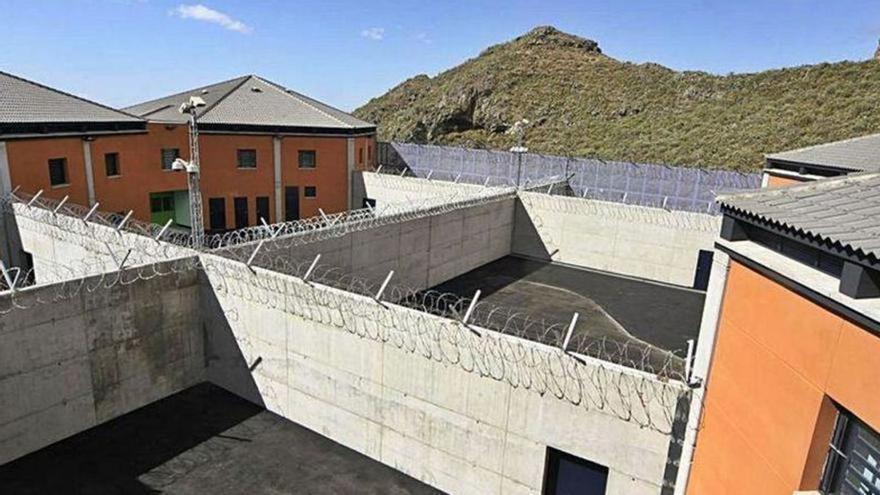
Valle Tabares Staff Warn of 'Loss of Control' in Discipline Debate
Staff at Valle Tabares, a center for young offenders, are in a contentious debate over facility management, fearing a loss of control due to perceived leniency, staff shortages, and educators' reluctance to enforce discipline against violent inmates.
A debate is brewing among staff at Valle Tabares, a center for young offenders, about the best way to manage the facility. This discussion might seem controversial to some.
The main question is: what kind of staff should work daily with young people who have committed serious crimes, and who sometimes have drug problems or mental health issues?
Should the center be lenient with those who break the rules, or should it enforce strict discipline?
Both educators and guards believe that staff working directly with the young people should be physically strong and imposing. However, they also need to be skilled at talking and negotiating with all types of juvenile inmates.
According to some staff, the Fundación Canaria Ideo, which runs the center, has recently focused on helping young people re-enter society through education and discussion.
These same staff members are now seriously questioning this approach. They warn that if the strategy doesn't change, the center risks "losing control," which could lead to unpredictable problems.
Andrés Pérez, who heads the guards' Works Council, believes there should be tougher discipline for very violent inmates. Guards are usually meant to stay outside the living areas and only enter in emergencies.
Pérez is concerned that guards are increasingly being asked to go into the living units to make up for a lack of educators, staff absences, and unsuitable staff profiles. This goes against current rules.
Patricia Pérez Barreiro, head of the Valle Tabares center's Works Council, admits that many hired staff are "very young, lack life experience, are close in age to the inmates, and earn salaries barely above the minimum wage."
She thinks it would be good to have at least two "strong men" as educators in each living unit. These individuals would earn the respect of the young people, both because of their physical presence and their ability to solve daily problems through discussion.
The Directorate General for the Protection of Children and Families has not yet commented on the matter.
Regarding the guards' complaints about their work inside the facility becoming routine, Candelaria Delgado, the Minister of Social Welfare, Children and Families, told Televisión Canaria that if guards believe their contract or collective agreement is being broken, they should speak to their employer. She sees it as an employment issue.
Andrés Pérez says people should know about the difficult situations educators face. Young offenders "spit on them, physically and verbally attack them, or intimidate and threaten them." He notes that these incidents lead to many staff taking sick leave.
The head of the private security company's Works Council explains that guards "should be the last resort" to intervene in living units during an emergency. However, he says, "they want to put us inside to cover the mentioned shortages."
According to Pérez, the situation has become particularly difficult in living unit 5. This unit houses young people aged 18 to 23 who were convicted as minors for serious crimes like homicide, severe assault, or sexual assault.
Patricia Pérez confirms that the situation in this unit is indeed getting more complicated. "There have been moments of lost control, and it's hard for the educational staff to restore order."
The educators have degrees in fields such as Psychology, Education, Primary Education, or Social Work.
According to the head of the Valle Tabares Works Council, "disrespect is daily and constant; they try to intimidate them physically and verbally."
Some inmates get very close to female staff, look down on them, and make it clear that they will eventually get their way, Pérez observes.
So, what happens to a young person who breaks the rules or acts violently? "For very serious cases, they are separated from the group for seven days," she explains.
She admits that the disciplinary system isn't as firm as it should be. "But it's also not applied because educators are afraid to enforce the rules and confront the boys," the union representative adds.
Several months ago, in living unit 1, a few inmates attacked two guards. One nearly lost sight in an eye, and the other suffered a concussion.
Another serious incident happened in unit 5, where two inmates of North African origin broke a classroom screen. They used small pieces of glass to cut themselves, then threatened the guards and educators. What was the outcome of this behavior? Only an official report and a punishment.