
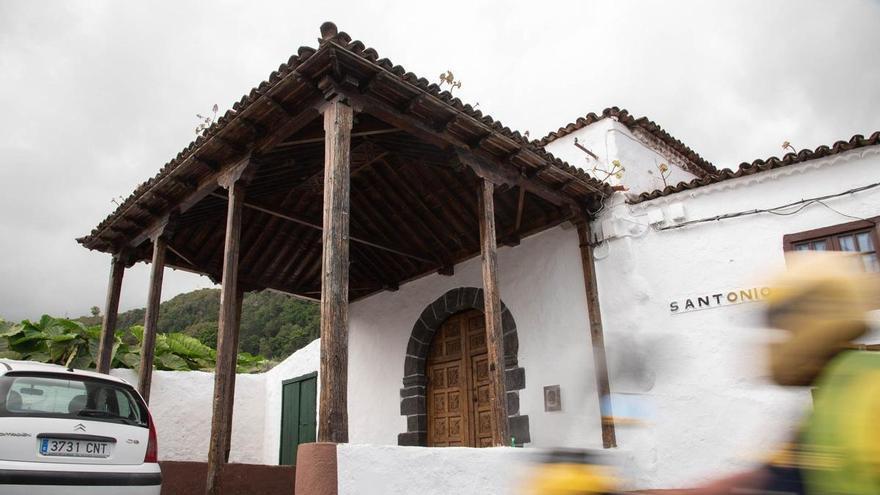
Unique 'Alpende' Architecture Reveals Portuguese Influence in Tenerife Churches
Recent research reveals that five churches in Icod de los Vinos, Tenerife, feature unique "alpende" structures, highlighting a distinct architectural legacy influenced by Portuguese settlers and the island's agricultural history.
The religious architecture in Icod de los Vinos, Tenerife, hides a unique feature that goes beyond traditional church design: the alpende, or "half-orange." Recent research into the town’s heritage shows that five local churches—San Felipe Neri, San Antonio de Padua, El Amparo, Buen Paso, and San Bernabé—feature these structures on their facades. Originally, these were agricultural shelters built to accommodate worshippers when the churches themselves were too small.
Experts like Jesús Pérez Morera and Carlos Rodríguez Morales explain that this design reflects the cultural influence of Portuguese settlers. The style—notable for its use of lime, specific bell gables, and unique roof shapes—is very similar to churches found in Madeira and parts of Brazil, where Portuguese influence was also strong during early colonization. This "Atlantic connection" can also be seen elsewhere in the Canary Islands, such as at the hermitage of San Pedro de las Lomadas in La Palma and the chapel of San Pedro Arriba in Güímar.
These structures show how rural building styles were adapted for religious use. While an alpende was typically used on farms to shelter tools or livestock, in Icod, they took on a social and functional role for the community.
The history of these buildings varies. The hermitage of Buen Paso, which dates back to the time of the conquest, contains what is believed to be the oldest example, though it has been significantly changed over time. The church of El Amparo features a rectangular portico with arches that replaced an earlier, roofless structure documented in 1792.
The construction techniques are also diverse. They range from the wooden ceiling at San Antonio de Padua, built in the early 1600s, to the unique upper gallery at San Felipe Neri, which researcher David Corbella Guadalupe notes was used by musicians during local festivals. The collection is rounded out by the masonry alpende at San Bernabé, a more recent addition. The survival of these traditional elements highlights the adaptability of local building techniques and serves as a physical reminder of the migration and cultural exchange that shaped the history of the Canary Islands.