
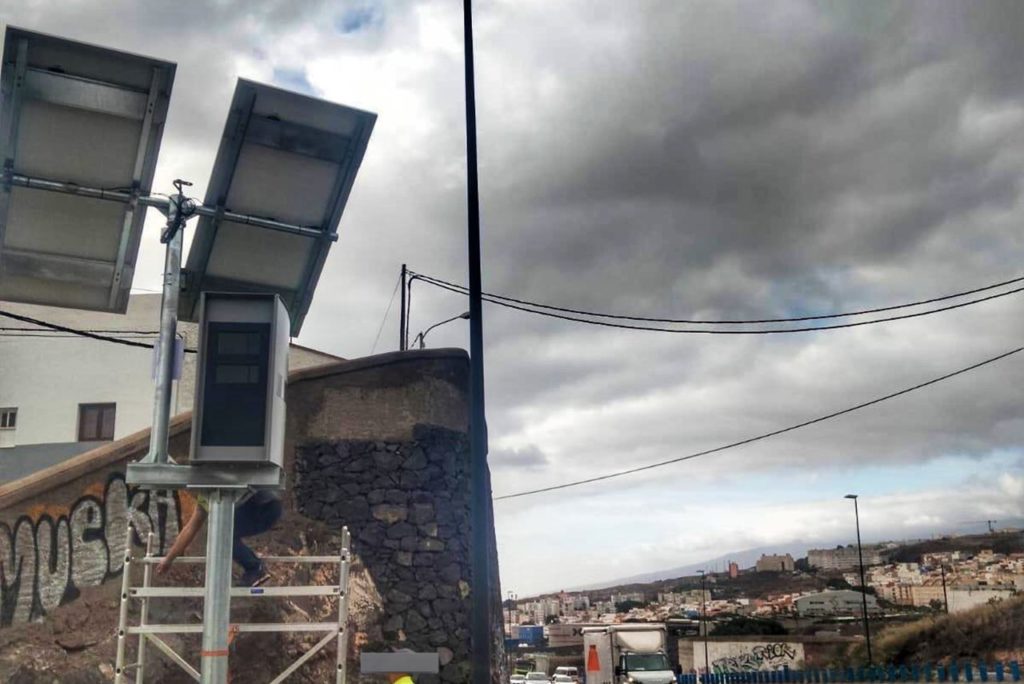
New radars installed in Tenerife: drivers warned about fines
Two new speed control radars have been installed in Tenerife as part of a nationwide Spanish program to reduce road accidents.
Two new speed control radars have appeared in Tenerife. They were installed on the TF-2 (1st kilometer) and TF-652 (2nd kilometer) highways. This is part of a large plan by the Spanish Road Service (DGT) to install 122 new cameras throughout the country by 2025.
Currently, the DGT is conducting a special speed check campaign throughout Spain, which will last until Sunday. This campaign is coordinated at the European level by the RoadPol organization. All this is done to reduce the number of road accidents, as provided for in the Global Road Safety Plan for 2021-2030. The goal is to halve road deaths over the next 10 years.
At first, drivers who exceed the speed limit in areas with new radars will simply be warned by letter. But then they will start to be fined.
Important: the locations of the cameras are marked on the roads, and they can also be found on the DGT website and added to the navigator.
Representatives of the authorities of the Canary Islands emphasize that the checks are carried out in the most dangerous areas, where accidents often occur due to speeding. The Civil Guard and local police are participating in the raids.
According to officials, speeding is the cause of about 30% of fatal accidents on Spanish roads. They remind that if a pedestrian is hit by a car at a speed of 80 km/h, there is almost no chance of survival. But at a speed of 30 km/h, the risk of death is significantly reduced – to 5%.
In April of this year, the Spanish traffic police checked more than a million cars, and more than 75,000 drivers were fined for speeding. In the Canary Islands, 120,000 cars were checked and more than 6,000 fines were issued.
According to European experts, 10 to 15% of all road accidents and 30% of fatalities in Europe are related to speeding. Surveys show that many Spanish drivers admit to speeding: on ordinary roads – 60%, in cities – almost 50%, and on highways – more than 60%.