
Tradex Fraud: Only 15% of €3M Client Funds Invested, Police Say
Tradex partners Mukesh Daswani and Francisco Imobach Pomares are on trial in Santa Cruz de Tenerife for aggravated fraud and asset hiding, accused of investing only about 15% of nearly €3 million collected from clients and spending the majority on a lavish lifestyle.
The police's Economic and Fiscal Crime Unit (UDEF) has reported that only about 15% of the nearly three million euros collected from clients by Mukesh Daswani and Francisco Imobach Pomares, the two partners behind Tradex, were actually invested in trading. This finding comes from a detailed analysis by police experts after the fraud was uncovered in July 2022.
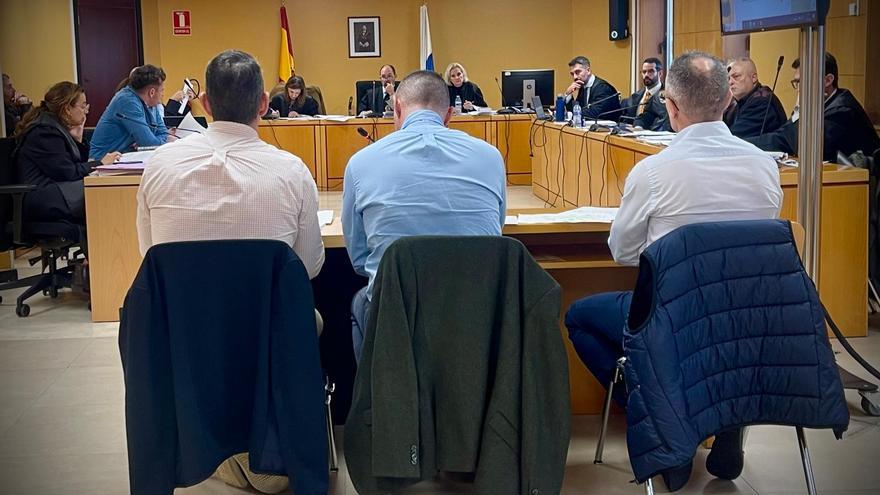
The head of the unit's Tenerife group, along with two colleagues, testified yesterday at the court hearing in Santa Cruz de Tenerife. Daswani and Pomares are on trial, accused of aggravated fraud and hiding assets. Prosecutors are asking for 12 years in prison for Daswani and nine years for Pomares. Daswani's ex-partner is also accused of profiting from the fraud. Prosecutors want her to return over 327,000 euros, which she allegedly received through transfers, gifts, trips, and luxury hotel stays, all paid for with money stolen through Tradex.
Police agents confirmed that the accused lived lavishly, enjoying many luxuries. They maintained a very high spending level from the moment they started operating under the Tradex name. Daswani created Tradex in April 2021, and by June of that year, it was already bringing in significant money by attracting investors. They promised to return investments plus 50% profit within two months of signing a contract.
The business seemed so successful that Daswani began hiring collaborators, including Francisco Imobach Pomares. In January 2022, Pomares became a 50/50 partner, jointly leading Tradex. Pomares greatly increased the commissions he received for bringing in new clients, earning "between 8% and 20% commission on the amounts invested by the clients he attracted," according to agents. This was determined by linking the income in his personal accounts to the capital he eventually transferred to the IG Europe platform, which they used for trading.
Like any Ponzi scheme, Tradex needed to attract more and more investors to pay back the initial clients their deposits and promised interest. If it met these conditions, it would be easier for early investors to reinvest and even to bring in new clients through word-of-mouth. This type of scheme works until it collapses because there aren't enough new investors to cover the payments owed to previous ones. The Tradex collapse happened on July 22, 2022.
In just a year and a half, Daswani went from receiving a 10,000-euro unemployment benefit payment to living a luxurious life in a villa in Tabaiba. He drove a Ferrari or an Audi R8, stayed in expensive hotels, and accumulated hundreds of thousands of euros in his accounts.
Investigators highlighted a complex financial network involving multiple accounts in the names of the two accused, others linked to Tradex, and some connected to the crypto market through platforms like Exchange Binance, Coinbase, and Revolut. When everything fell apart, money was transferred to a Kucoin account, known as a "digital cold wallet" that "guarantees secret and private operations for its clients. They even refuse to cooperate with any investigation or court order," one investigator noted.
Agents detailed the money coming in and going out from Daswani's accounts. He transferred 262,421 euros to his partner Pomares and 327,000 euros to his partner Cecilia Hernández. He spent 265,250 euros on high-end cars, 87,543 euros on employee salaries, 52,000 euros on office rent, 143,310 euros on housing, 102,790 euros on jewelry, 19,900 euros in ATM withdrawals, and 17,165 euros in Bizum payments.
He received 2,819,230 euros from investors and returned 1,513,770 euros to them. However, records show that the actual capital he invested in the IG Europe platform was only 380,218 euros. Although he and Pomares told all potential investors they had a foolproof method for high profits, the figures show he was an unsuccessful trader, incurring losses and only managing to withdraw 154,827 euros.
Agents also presented Pomares' bank transactions, which showed a similar pattern. He invested 62,415 euros in IG Europe and only recovered 32,800 euros. Two investors each deposited 50,000 euros with him, but he only transferred 83,000 euros to the company behind Tradex (Pomares & Daswani). He also made transfers to Coinbase for 50,000 euros, spent 19,000 euros on cryptocurrencies, bought a Range Rover for 21,000 euros, and made transfers to other virtual accounts.
The investigation indicates that most of the money was not kept in one place but constantly moved between various accounts belonging to those involved, including foreign bank accounts.
Another key detail revealed yesterday by UDEF agents is that Tradex, despite presenting itself as an investment firm, never legally existed. It lacked the required permits from the National Securities Market Commission (CNMV), which are essential for trading on stock markets, and was not officially registered as a business.
Investigators also revealed that the screenshots Tradex sent to investors, claiming to show their trading operations, were actually from the "lite" or practice version of the original IG platform trading program – "a copy to learn how to invest," agents concluded. Investors received these screenshots via WhatsApp almost every week. They always showed profits, never any bad news or market changes. Tradex even claimed that the promised profit had been reached in just one week, although investors had to wait two months to cash out their principal plus profits if they wished.
The defense lawyers tried to challenge the agents' reports. The agents testified for over four and a half hours, answering questions from all parties. Mukesh Daswani's lawyer attempted to downplay the amount his client allegedly defrauded, claiming it was around 400,000 euros, not the more than 2.8 million euros stated by the victims' lawyers and the prosecutor.
In their report, agents also pointed to Daswani's alleged plan to escape Spain with his partner to the United Arab Emirates. This involved moving money between intermediary accounts, digital wallets, and accounts in countries that make investigations difficult, such as a Revolut account based in Lithuania. Additionally, he sold two luxury cars to a company, from which he supposedly received 140,000 euros. However, his lawyer stated that Daswani only received 60,000 euros for the Ferrari, and the 80,000-euro payment for the Audi R8 was cancelled.
Most of the four and a half hours of testimony from the agents focused on Francisco Imobach Pomares' activities. His defense highlighted Pomares' cooperation with investigators after he himself reported the scam to the police. He brought three blue folders and other documents, which his lawyer claimed contained "all the contracts." The head of the UDEF group in Tenerife confirmed that Daswani's partner "handed over some folders with contracts, but I don't know if they were all the contracts."
Pomares' role has been one of the most debated points in the trial. Although he was the one who filed the complaint when the alleged scam came to light, he ended up being accused. While he describes himself as just an occasional helper, like any salesperson, investigators maintain that he was a crucial part of the operation from the beginning.
Agents revealed that "after filing the complaint on July 22, barely a week later, he emptied almost all his accounts, leaving only about 1,000 euros in one and just over 2,000 in another." Furthermore, they showed how he moved that money through various exchange platforms and into a "cold wallet" like Kucoin.
The defense for Cecilia Hernández, Daswani's partner accused of benefiting from the crime, aimed to show that Daswani was an authorized user of her client's bank account and had several linked cards, some in Cecilia's name and some in Daswani's. Her lawyer suggested that agents might not have considered the possibility that Daswani managed this account, given that he transferred money into it and used it for many purchases for the Tradex founder.
The collapse of the scheme was followed by Daswani's escape. His partner, Cecilia Hernández, told the police at the time that on the day Daswani told employees there was no money left, she drove him to the city center. She said "he got out of the car and she never heard from him again." However, agents reported that a neighbor of the couple confirmed Daswani was at the house that afternoon. Imobach himself also told agents that his partner had been planning for months to move to Dubai and buy a house. Daswani did leave for the United Arab Emirates, and agents confirmed he intended to reunite with his partner and young daughter, based on Cecilia's attempt to get a passport for the child and Daswani's bank transactions in the UAE.
International cooperation, through Interpol, was crucial in catching Daswani, who also hired a law firm in England for over 60,000 euros.