
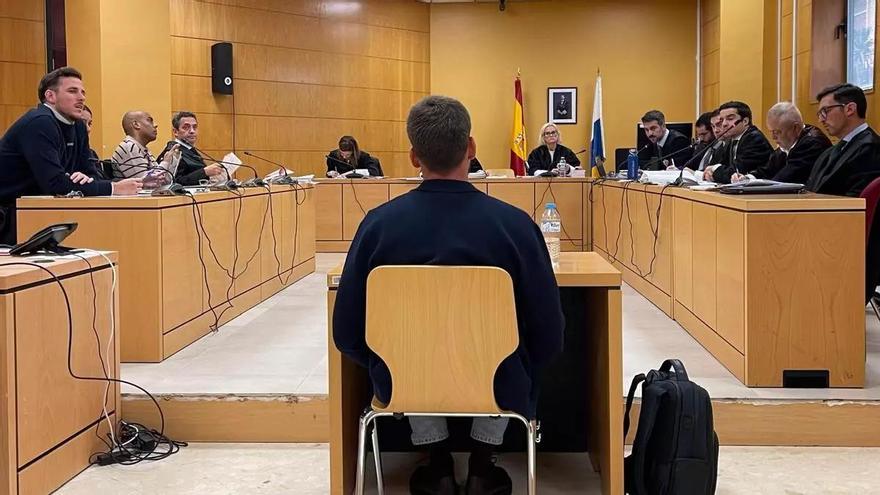
Tradex Boss Blames Colleagues in €2M Pyramid Scheme Trial
Mukesh Daswani, on trial for the Tradex pyramid scheme, admitted to poor management and being overwhelmed but shifted blame to colleagues, claiming they knew about the fraud that swindled nearly 100 investors out of €2 million.
Mukesh Daswani, the main person accused in the Tradex pyramid scheme case, has tried to shift the blame to his close colleagues. He claims they knew what was going on, including the other defendant, Francisco Imobach Pomares.
During his trial at the Provincial Court of Santa Cruz de Tenerife, Daswani admitted that he eventually saw "the dream of profits turn into the reality of losses." He confessed his management was "very poor" and that he was "completely overwhelmed by the situation."
Daswani is the only one held in custody before the trial. He faces charges of swindling nearly a hundred investors out of two million euros. He allegedly promised them profits of up to 50% in a short period.
He claimed the company used a standard contract with his signature, but his colleagues handled it and could change it. Because of this, he said he didn't know about many of the agreements made with clients.
Daswani stated that he started Tradex at the beginning of 2021. He used his unemployment benefits and severance pay from his previous job to fund it. His initial plan was simply to offer in-person classes.
He explained that his students eventually asked if they could make real investments. He initially refused, but they kept pushing, so he agreed to accept deposits of just 1,000 or 1,500 euros.
"Word spread, and I got about six clients," he told the court. "By May of that year, when I had about eleven clients, they insisted I take larger sums."
In the early months, he didn't sign contracts with either investors or employees, explaining that his staff only "lent a hand." However, by the end of 2021, he started working with the other defendant, Francisco Imobach Pomares, who began as a student and then "became deeply involved."
Around that time, he had three other employees and a changing number of commission agents. Investments ranged from 5,000 to 10,000 euros until February 2022. Then, they "increased exponentially," partly because Pomares brought in many clients, including friends and family.
In April, losses started appearing. Daswani claimed these were separate issues and didn't become clear until July 22. On that day, employees made him meet them, he was assaulted, and police had to escort him out of the office.
People acting violently were also waiting for him at his parents' house, where he sought refuge, and at his own home. So, he followed his father's advice to flee to Abu Dhabi, United Arab Emirates, "until the situation calmed down." He was eventually arrested there.
Daswani claimed that in the days before, his colleagues got into his bank account after the manager gave them the details. This meant they knew about the losses, which is why they pushed for the meeting. He added, "if anyone had wanted to leave, he would have found a way to pay them."
In total, he believes he personally earned 600,000 euros out of the two million euros he handled during that period. The other defendant, Pomares, allegedly received 245,000 euros.
The group used a global trading broker, opening several accounts linked to a bank account. However, such a "maelstrom of money" was moving through them that the manager eventually noticed and questioned Daswani about where the funds originated.
Seven or eight transfers were happening daily. Despite this, the group didn't have enough cash and wasn't approved by the National Securities Market Commission (CNMV). Daswani claimed the requirements were "impossible to meet."
He justified opening an account with a company in Lithuania by saying it offered enough security and assurances, not because it was a tax haven, as the prosecution alleges.
Daswani admitted to having expenses, such as buying two expensive cars, which he later had to sell cheaply when he needed cash. He also paid 2,000 euros a month to rent a home in Tabaiba.
Regarding his partner, who is also named in the case as financially responsible, he said they opened a joint account. She made some small trades under his supervision, and the Bizum payments found were used for daily expenses.
He explained that luxury items like trips, hotel stays, and handbags were "a way to show my affection" to the person he called "my wife."
He claimed he personally only got up to 3,000 euros in cash at the start. He also said the other defendant told him an investor had given him almost 65,000 euros, which "shocked" him.
He stated that Pomares told him a client planned to invest 350,000 euros and wanted to put 150,000 euros into his account in one go. Daswani refused. According to the prosecutor, the money was then split into two payments of 50,000 euros. Daswani would receive 80,000 euros from this, but it wasn't explained what happened to the remaining 20,000 euros.