
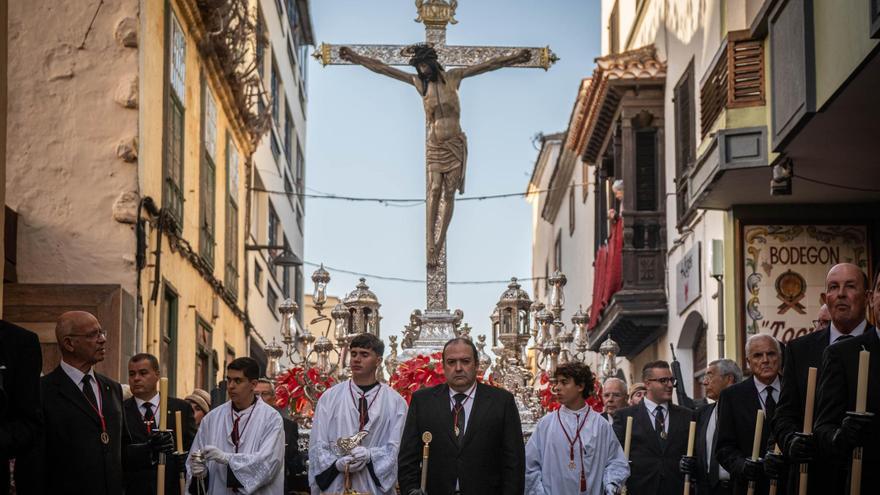
Tenerife Celebrates Cristo de La Laguna: A History of Faith and Traditions Through the Centuries
In Tenerife, the ancient festival of Christ de La Laguna is revered, combining religious traditions, popular festivities, and the island's cultural heritage since the 17th century.
Tenerife has a special holiday – in honor of Christ de La Laguna. It is very old and important for the locals. Its history dates back to the 17th to 20th centuries. In those days, religion, culture and city life were closely intertwined, and this holiday was the main event of the year for the residents of La Laguna.
This is not just a religious holiday, but also a symbol of the culture and traditions of the Canary Islands, which is still revered today.
In the 17th century, the celebrations were very religious and solemn. The statue of Christ was taken out of the monastery and carried through the streets of the city. People followed it with candles and sang religious songs. Then an interesting tradition appeared: women came in white capes that covered part of their faces. They were called "tapadas" (covered). This way they could participate in the holiday without attracting attention. This showed that women were very pious, but at the same time had to adhere to strict rules of conduct.
In addition to the procession, people decorated the streets and altars with flowers, garlands and religious symbols. The holiday united people, gave a sense of community and faith. This became the basis for even greater celebrations in the following centuries.
In the 18th century, the holiday became not only religious, but also cultural. The procession remained the main event, but entertainment and folk festivals were added. Contests, games and music with drums, lutes and guitars were organized. Everyone could participate in the holiday.
Also, when there were any troubles, such as drought, the residents of Laguna asked Christ for help. Only in the 18th century, the statue of Christ was taken out 18 times to pray for rain.
Wealthy families gave money for altars and decorations, and poorer families helped with work or food. Thanks to joint efforts, the feast of Christ de La Laguna became something more than just a religious event. It reflected the life of the city and its culture.
In the 19th century, the holiday became large-scale. In the Plaza de Adelantado, in the center of La Laguna, music was played, parties and dances were held. People came from all over the island. The holiday became a meeting place for different cultures, where everyone could rejoice and honor Christ.
The program included solemn processions, church services, races, competitions and folk games. Livestock fairs were also organized, which showed the importance of agriculture for the island. New entertainments appeared, such as launching balloons, which amazed and fascinated people. The combination of religious traditions and folk entertainment made this holiday the main event in Tenerife.
In the 20th century, the celebrations continued to change, but did not lose their religious essence. The procession of Christ de La Laguna remained the most anticipated event. Concerts, dances, fairs, children's events and performances were added.
The holiday became a symbol of local identity, a combination of faith, traditions and tourism. Locals and guests could enjoy the historical and cultural heritage of La Laguna: its ancient streets, architecture and folk customs.
From the 17th to the 20th century, the feast in honor of Christ Lagunero was much more than just a religious celebration. It reflected the life of Laguna, its economy, culture and people. Faith and joy were combined in processions, music, dances and competitions. This created a sense of community that was passed down from generation to generation.
This holiday shows how faith can be combined with folk culture, how traditions change over time, and how an entire city can celebrate its history and identity. And today, Christ de La Laguna remains a symbol of faith and unity. Thousands of people come to his holiday to experience the true atmosphere of Tenerife.