
The Legacy of Asilo Victoria: A Century of Social and Educational Evolution in Tenerife
Founded in 1911, the Asilo Victoria in Santa Cruz de Tenerife evolved from a charitable institution for vulnerable children into a prominent Salesian vocational school that continues to support local students today.
The history of social support in Santa Cruz de Tenerife is deeply rooted in the Asilo Victoria. The institution’s evolution offers a clear look at how charity and education changed in the Canary Islands throughout the 20th century.
The project began in March 1906, led by Aurea Díaz Flores Hernández, a prominent local philanthropist and wife of the mayor, Pedro Schwartz y Matos. With the support of the City’s Ladies' Board, she sought to create a center dedicated to educating and supporting vulnerable children.
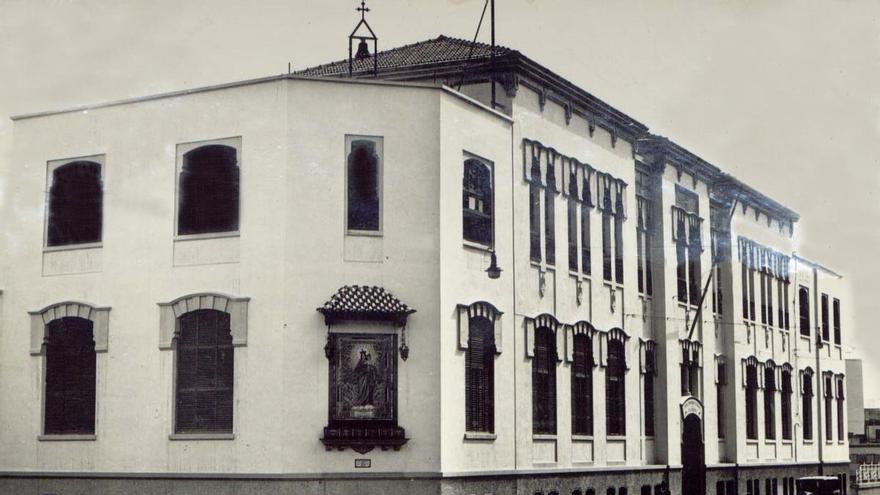
To gain support from the city's political and economic leaders, the organizers hosted a large-scale luncheon at the Círculo de Amistad XII de Enero, funded by the Bank of Spain. This helped pave the way for the building’s inauguration in 1911. Designed by municipal architect Antonio Pintor, the project cost 70,000 pesetas and was built on land donated by the City Council at the corner of Galcerán and Ramón y Cajal streets. It also received royal patronage from Queen Victoria Eugenia, who served as honorary president, along with King Alfonso XIII and Infanta María Teresa.
Initially, the De La Salle Brothers managed the school, combining academic lessons with vocational training in trades like shoemaking and carpentry. In 1943, the Ladies' Board handed management over to the Salesian congregation. The school was renamed the San Juan Bosco Salesian Vocational School and became a leader in technical education, offering courses in mechanics, electricity, printing, and drafting, while also becoming well-known for its music bands.
The original building, which featured a famous Sevillian mosaic of Mary Help of Christians, was demolished in 1982. The Salesian community then moved to the La Cuesta neighborhood in La Laguna. There, the institution has continued its work, adapting to modern Spanish educational requirements and offering Baccalaureate and vocational training programs. Today, the school’s legacy lives on through the support of local families, whose contributions to a scholarship fund ensure that students facing financial hardship can continue their education.