
The Evolution of the Canary Islands Flag: A History of Identity and Compromise
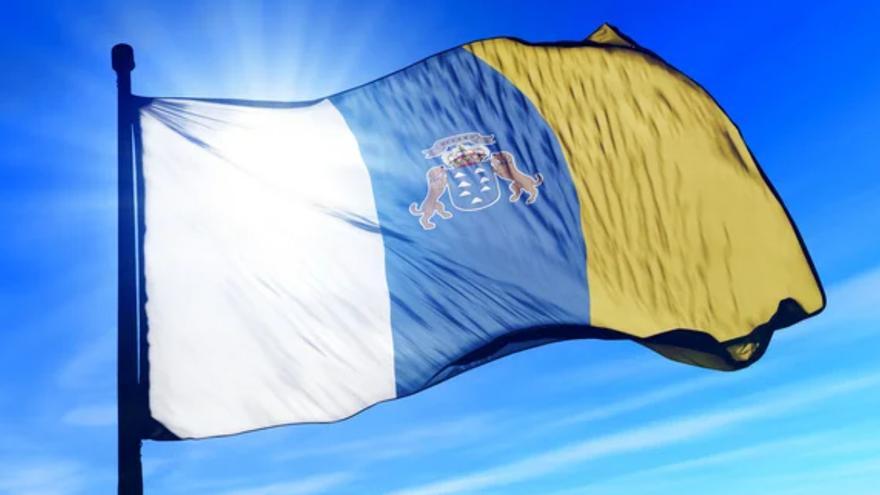
The official tricolor flag of the Canary Islands, adopted in 1982, represents a complex historical evolution from 16th-century royal banners to a modern symbol of regional identity and political struggle.
The visual identity of the Canary Islands is now a constant presence in daily life across the archipelago, but it is the result of a long, complex history of political debate and compromise. The current tricolor flag—white, blue, and yellow—is more than just an official emblem; it is the final product of a symbolic evolution that began in the 16th century and gained momentum during Spain’s transition to democracy.
The flag’s legal status was established by the 1982 Statute of Autonomy. The design features three vertical stripes, with the colors chosen to represent the two historical provinces: white and blue for Tenerife, and blue and yellow for Gran Canaria, with blue serving as the common thread. However, the design had already gained social significance in 1961, when the group Canarias Libre used the tricolor as a symbol of opposition to the Franco regime. That version was created by María del Carmen Sarmiento and brothers Jesús and Arturo Cantero.
Beyond the official flag, there is also a version featuring seven green stars. While this design has no legal status, it remains a powerful symbol for nationalist movements and social protests. It combines the 1961 tricolor with a blue flag featuring seven white stars, which was first created by the Ateneo de La Laguna in the early 20th century to protest state policies. The green star version was later popularized by Antonio Cubillo, a key figure in the MPAIAC.
The official adoption of the flag in 1982 was intended to provide a unified symbol for the region, allowing for both the plain flag and the version featuring the regional coat of arms. In 2005, the Canary Islands government updated its corporate identity manual to standardize how the flag should be displayed. What started as a royal banner in 1561 has evolved into a modern symbol that balances official authority with the diverse political history of the islands.