
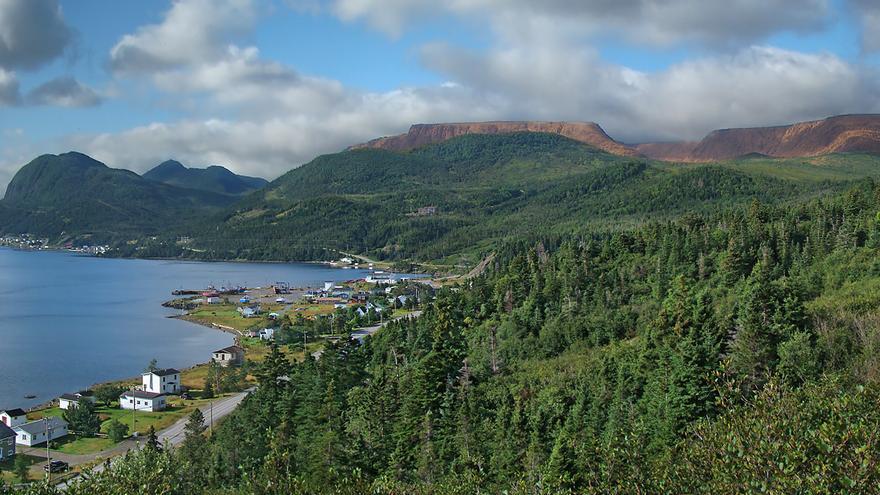
Canadian "Tenerife": A mountain with a Spanish name in Gros Morne National Park
In the Canadian Gros Morne National Park is the Tenerife Peak mountain, named after the Spanish island by James Cook in 1767.
Sometimes you look at a map and can't believe your eyes. Here you are in Canada, among fjords and forests, and suddenly you see the inscription "Tenerife" on a hill by the sea.
This is not a mistake. Names travel the world. Sailors, cartographers, and colonists carried them across oceans, and they took root on capes, in bays, and in villages thousands of kilometers from home.
Tenerife Peak is a 545-meter-high mountain on the west coast of the island of Newfoundland, in Canada's Gros Morne National Park.
Spanish-speaking tourists are surprised by this name, and for good reason: it was given by James Cook in 1767, when he was completing his exploration of Newfoundland.
Almost ten years later, Cook stopped in Santa Cruz de Tenerife (in August 1776) on his way to the Cape of Good Hope.
This mountain towers over the coastal village of Glenburnie, in the heart of Gros Morne. It is not very high, but unique due to its name and local nature.
It is usually climbed without special equipment.
Tenerife Peak is located in a place where the movement of tectonic plates is very visible. Gros Morne National Park is a place of fjords, cliffs, peat bogs and forests.
There is the Tablelands plateau, which consists of rocks from the Earth's mantle. It looks rusty and almost devoid of vegetation, like a landscape from a Jules Verne novel.
Nearby is Western Brook Pond, a freshwater fjord nestled between cliffs. This is one of the most beautiful places in the park. In season, you can take a boat ride or walk the 3-kilometer trail to the pier.
If you get here, climb to the peak and read its name aloud. You will understand that words also travel. Sometimes an unusual name is enough to connect the foggy Canadian coast with sunny Tenerife.
That is the beauty of travel: to find something familiar in an unexpected place.