
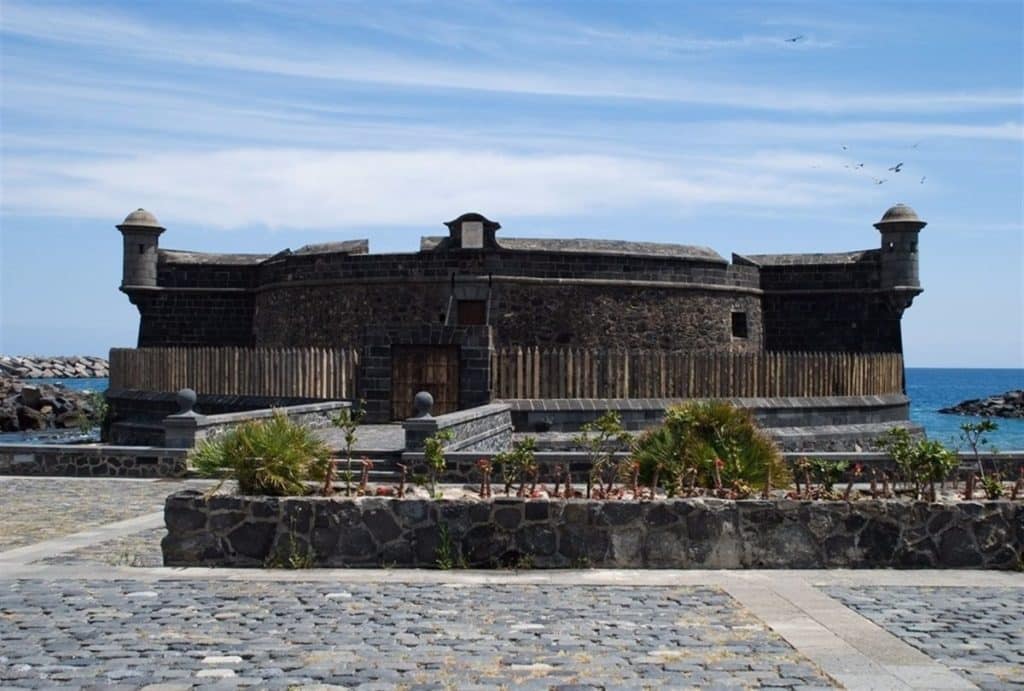
The Black Castle: The Strategic History and Uncertain Future of Santa Cruz’s Coastal Fortress
The historic Black Castle in Santa Cruz de Tenerife remains a well-preserved but inaccessible monument, sparking ongoing local debate over how to repurpose the former 17th-century defensive fortification.
The history of Santa Cruz de Tenerife’s fortifications is a story of a city defined by its need for defense. For centuries, this obsession with security shaped the capital’s economy and urban layout. The Castle of San Juan, widely known as the "Black Castle," is the best example of this coastal strategy, which began with plans drawn up by engineer Leonardo Torriani in the late 16th century.
Building the castle was a difficult task driven by political instability. To protect the coast from foreign attacks—especially during the conflicts of 1640—local authorities had to scrape together funding from wherever they could, even cutting budgets for public salaries and church events. The original structure was later overhauled in 1765 by Alejandro de los Ángeles, who added thick basalt walls, an upper deck for cannons and mortars, and living quarters for soldiers and supplies.
The castle proved its strategic value during the 1797 British attack on the city. While its role was mostly limited to deterring landing craft, it served as a base for both local and French troops, reflecting the complex military alliances of the time.
By the 20th century, the castle faced the common fate of many historic sites that lose their military purpose. After the Army declared it obsolete in 1924, the building entered a long period of uncertainty. Plans to turn it into a museum under the Cabildo de Tenerife never came to fruition, leading to years of neglect. It wasn't until 1982 that the Santa Cruz City Council took over ownership and maintenance.
Today, the Black Castle stands as a striking monument of volcanic stone—likely the source of its nickname, though its official name comes from the nearby cove. While the city maintains the structure well, it remains closed to the public. This has sparked an ongoing debate about how to best use such a significant piece of history, as the castle still waits for a new purpose that honors its long past.