
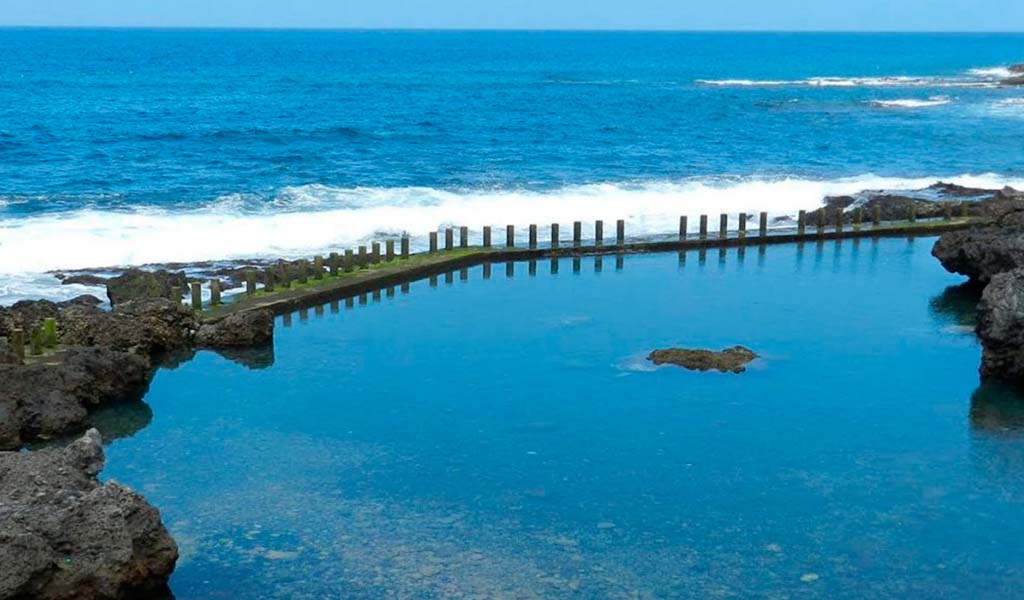
Canary Islands natural pools: deadly beauty, rescuers' warning
The number of accidents in natural pools in the Canary Islands is increasing due to the carelessness of tourists and locals, especially during storms and when attempting to rescue drowning people on their own.
The natural pools in the Canary Islands are a true gem, loved by both locals and tourists. However, due to the large number of visitors, one must be especially careful here. Unfortunately, this is often forgotten lately.
In 2022, a wave washed away seven people who were swimming in the Los Gigantes pool. One woman suffered a serious head injury, while others suffered leg cuts, dislocated fingers, and chest injuries. It could have been irreparable.
Nearby, in the famous Tancon cave, about six people have died in recent years. Rescuers have had to pull drowning people out of there more than once. In this paradise with crystal clear water among volcanic rocks, people are drawn into a funnel, hit against the rocks, and sucked in by the current.
Almost 20% of fatal water accidents in the Canary Islands occur in natural pools, bays, and tancons. And there are about 500 of them here! This is according to the "1500 Kilometers of Coastline" platform, which recorded 66 drowning deaths on the islands in 2022.
Expert Sebastian Quintana, head of the platform, says that the main cause of the tragedies is carelessness. He identifies four main mistakes that can lead to fatal consequences.
The first is visiting natural pools in stormy weather. The second is a false sense of security inside the pool. When a wave comes, the water level rises sharply, and this mass hits the rocks with force, changing direction and sweeping away everything in its path.
If a person is not stunned by being hit against the rocks, they will panic and start swimming to shore with all their might. And here comes the third mistake: the oncoming current will not let them move forward, their strength will quickly run out, and the person, exhausted, will go to the bottom.
So what should you do if you find yourself in this situation? Quintana advises: "The safest thing to do is to let the current carry you away from the surf zone, conserve your strength, and wave your hands so that you can be seen from the shore and rescuers are called. Never try to get ashore where you were washed away."
The fourth mistake, according to the expert, is the "false hero" syndrome. This is when a person, seeing someone drowning, rushes into the water "empty-handed." "They don't realize that they risk becoming a second victim," Quintana warns.
"In most cases, an amateur rescuer does not take any swimming aids with them to help themselves and the person who is drowning. The best thing to do is not to jump into the water, especially if the sea is rough. The right thing to do is to call 112 immediately."
The "1500 Kilometers of Coastline" platform also warns that many swimmers, especially tourists, do not know how waves form near the shore. "They come in series of 7-8 one after another, and there is a break of 4-5 minutes between the series. Some swimmers think that this short period of calm is the end, but in reality it is a trap," Quintana emphasizes.