
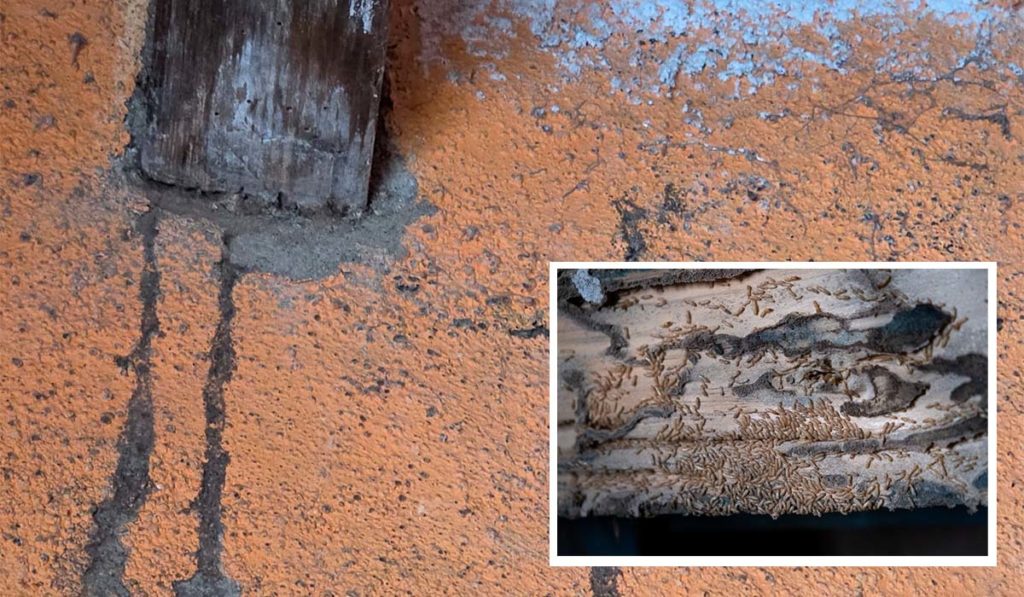
Termite Infestation Spreads to Private Homes in Tenerife Amid Growing Public Outcry
The discovery of Reticulitermes flavipes termites in a Tacoronte home has intensified tensions between residents and authorities over the effectiveness of ongoing containment strategies in Tenerife.
The spread of Reticulitermes flavipes in Tenerife has reached a critical stage after subterranean termites were discovered in a private home in the La Caridad neighborhood of Tacoronte. As reported by Diario de Avisos, this latest outbreak has alarmed residents, as the pest—which has plagued various parts of the island for over a decade—continues to threaten their homes.
The infestation was identified by the president of the Association of Those Affected by Subterranean Termites, who found insect activity in his own wooden ceiling beams. Tragsatec, the company managing the containment efforts, responded by installing additional chemical bait stations. This incident underscores the difficulty of controlling a pest that continues to spread despite ongoing technical interventions.
Current efforts are focused on an adjacent plot of land, formerly used as an illegal dump for plant debris. Authorities have declared an emergency to build a 300-square-meter concrete slab, which will house a facility to shred and treat the accumulated wood. This project aims to reduce both fire risks and termite breeding grounds.
However, the strategy has become a source of controversy. While Tragsatec maintains that its 2,200 bait stations are effective and that the construction timeline is necessary for the concrete to cure properly, the residents' association disagrees. Neighborhood representatives argue that management has been insufficient, noting that 7,000 cubic meters of wood in an unregulated dump have served as a source of infestation since 2016.
Tensions remain high. The association is considering legal action to demand accountability, arguing that the current chemical barriers are failing. Meanwhile, technical managers insist that eradicating Reticulitermes flavipes is a long-term process, estimating that it will take six to nine months to see a significant drop in the termite population. The situation in Tacoronte highlights the struggle of managing urban pests, where the slow pace of official solutions clashes with the urgent need of homeowners to protect their property from a threat that continues to grow.