
Tenerife Wood Waste Firms Face Closure Without Island Council Aid
Tenerife wood waste companies are requesting monthly financial aid from the Island Council to offset losses caused by the free distribution of wood chips and prevent potential closures and layoffs.
Wood waste companies in Tenerife are asking the Island Council (Cabildo) for financial help to stay afloat. These five companies, part of Acanec, a group promoting recycling on the island, say they need about €20,000 a month to cover costs and avoid layoffs.
While they support giving away wood chips from trees burned in the 2023 fire to farmers, they say this free distribution is hurting their sales. Without some form of compensation, they claim their businesses are struggling.
David González Montañez, head of Acanec, believes these companies are vital for reusing natural resources by managing wood and pruning waste. They've formally requested an average of €4,000 per company each month from the Cabildo.
González clarifies they aren't seeking full sales revenue, but rather enough to cover basic running costs, which they calculate to be €22,413, after deducting associated expenses. He warns that without immediate help, these businesses risk closing down and laying off staff.
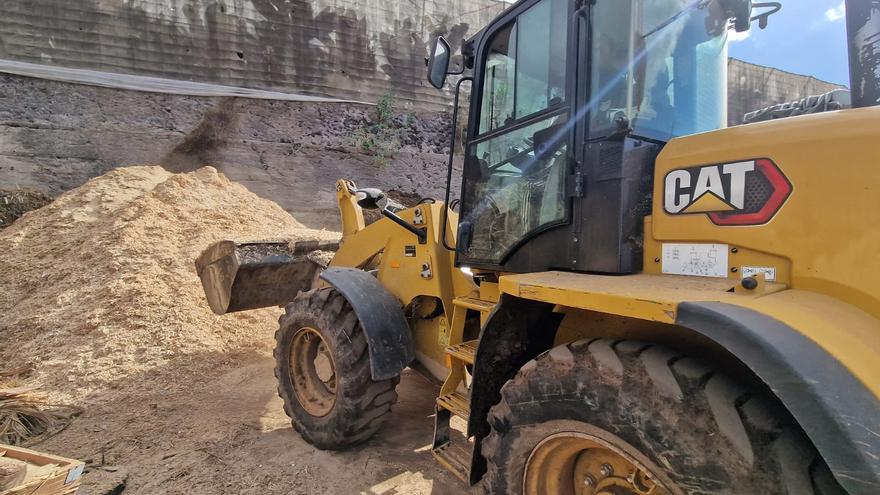
These companies play a key role in processing plant matter and pruning waste from Tenerife's mountains. Selling wood chips is a major source of income, but the Cabildo is now giving these away for free. Acanec insists they don't oppose this free distribution, but they've been waiting over a year for compensation to offset the impact on their businesses.
The Cabildo previously auctioned off wood waste, but González Montañez says these auctions failed because companies couldn't afford to buy such large quantities of perishable, low-quality wood. He also points out that farmers benefit from the free wood chips. He warns that if these companies close, there will be no one to manage wood chip processing from the mountains to reuse. They're asking the Cabildo for temporary compensation, but haven't received a response.
Despite 15 months of discussions with the Cabildo, David González says they remain committed to finding solutions. He emphasizes they're not seeking profits, but simply need help covering costs to prevent closures.
Acanec urges the Cabildo to quickly address the issue, recognizing the sector's importance in preventing fires, promoting sustainability, and creating green jobs. They hope for an agreement that benefits everyone in Tenerife.
Jacobo Rodríguez Sicilia, Acanec's vice president, stresses the need for immediate action to address the financial strain. He acknowledges the importance of environmental safety and disposing of post-fire materials, but notes that the free distribution negatively impacts the companies' financial stability.
González Montañez highlights the sector's strategic importance, providing services to local councils, businesses, and individuals. He concludes that their work is essential for maintaining Tenerife's ecosystems, landscape, and environment, and for achieving the Cabildo's environmental and safety goals.
Acanec was formed this year from Agercan, a waste association founded in 2012, with the aim of turning waste into reusable resources. It represents thirty companies in the Canary Islands, mostly in Tenerife, and promotes a circular economy model supported by the European Union. They argue that if they can't sell wood, they should be compensated for lost income.