
Tenerife Waiter Rescues Tourists From Rogue Wave
A Tenerife waiter heroically rescued three tourists from a rogue wave on a tragic day when three others died along the coast, highlighting the critical need for visitors to heed dangerous sea condition warnings.
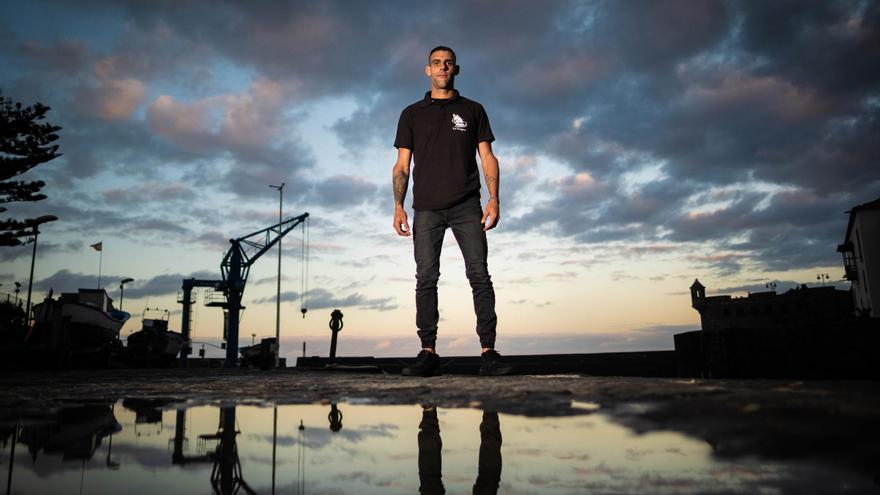
Pedro López, a young waiter from Tenerife, became a hero on Saturday, November 8th. He works at La Fragata bar in Puerto de la Cruz. On that day, which will be remembered as a dark one for Tenerife's coast, he saw about eight people fall from the pier's breakwater. "I jumped into the sea without thinking," he said.
From La Fragata's big window, López had a clear view of the pier's breakwater. He saw "a first wave that crashed against the wall and a second one that swept them away." He recounted this the day after the tragedy, while still working tirelessly. He immediately ran out, driven by an overwhelming urge. "That's just how I am; I don't know about others, but that's how I am," he explained, unable to fully describe what made him save three tourists from the rogue wave.
López is also a professional fisherman, so he knows the sea well. His advanced first aid training helped him with the rescue. Another person tried to help, but nearly drowned, making their attempt unsuccessful.
Saturday, November 8th, was a tragic day, with three lives lost along Tenerife's coast. Pedro López was a key figure in preventing more deaths at the Puerto de la Cruz pier. There, a 79-year-old Dutch tourist, who had arrived on a cruise that morning, died. Other fatal incidents included a 43-year-old resident of La Orotava falling into the sea at El Viento tidal pool in La Guancha, and a fisherman's body found floating off El Cabezo beach (El Médano) in Granadilla de Abona.
In total, 15 people were injured that Saturday. In Puerto de la Cruz, nine people were affected, with three suffering serious injuries. Separately, six French tourists were swept away by a rogue wave at Roque de las Bodegas beach in Taganana, after ignoring a buoyed area that warned against entry. A pre-alert for dangerous coastal conditions had been issued on Friday, November 7th, and was expected to stay in place until Monday, November 10th, for Tenerife's north coast.
Such incidents are common in Puerto de la Cruz during stormy seas. The staff at La Fragata, like Pedro's colleague Antonia, are tired of seeing tourists take unnecessary risks. Antonia, who has worked at the bar her whole life, called Saturday's events "terrifying." She noted that "those people were walking on the breakwater." She believes that "most of the times something like this has happened, it has been foreigners. People from here won't go near if the sea is like that. You have to respect the sea."
Pedro López suggested that hotels should warn tourists about sea conditions. A customer, who saw the accident and wished to remain anonymous, proposed placing "pictograms or signs alerting about the sea conditions in the bay, just like there are for speed on roads." This idea sparked memories among those at the bar of a similar tragedy almost thirty years ago, in the late nineties, involving tourists in the same location.
Data shows that seven out of ten people who die on the Canary Islands' coasts are foreigners, according to Sebastián Quintana, president of the 'Canary Islands 1,500 kilometers of coast' association. He explained that "tourists come here in airplane mode, relaxed and without information," often unaware of warnings like the pre-alert for dangerous coastal conditions on Tenerife's north coast.
Quintana believes the main issue is that "warnings do not reach the Archipelago's floating population. Ironically, they are the ones who drown the most in the Canary Islands." He describes these individuals as "unconscious reckless" tourists, typically European, who "completely ignore how the sea works, that it comes in series." He explained that strong waves often come in groups of six or seven, followed by a few minutes of calm. "At these moments, when the tourist approaches to see the sea and take photos, the series begins forcefully, treacherously," he warned.
Quintana also identified another type: the "conscious reckless." This person "believes they control the sea because they know it, grew up on the coast, and also has a certain immortality syndrome." He suggested the fisherman found dead in El Médano might fit this description. Quintana concluded that "prudence and information are the best life raft" to prevent deaths on the Canary Islands' coasts.