
Tenerife to Slash Teide National Park Visitor Numbers in Major Overhaul
Tenerife’s local government is implementing a major management overhaul at Teide National Park, including a new shuttle system and strict traffic controls, to reduce visitor numbers by 50% and protect the volcanic ecosystem by 2027.
Teide National Park is undergoing a major management overhaul following the transfer of authority from the Canary Islands government to the Cabildo of Tenerife. The island’s local government is taking direct control to reduce human impact on the park’s volcanic ecosystem, with a goal of cutting visitor numbers by 50%. This new approach mirrors the management styles of world-renowned parks like Yellowstone and Yosemite, where limiting private traffic and managing visitor flow are essential to protecting the natural landscape.
The core of this strategy is a new transport plan. By 2027, the Cabildo will launch a shuttle bus service connecting major hubs—Puerto de la Cruz, La Laguna, Costa Adeje, and Puerto Santiago—to the park. These buses will run every 20 minutes and aim to transport one million passengers annually. While the service will be free for Tenerife residents, other visitors will pay a fee. Additionally, a new internal shuttle will run between the visitor center and the Roques de García to discourage the use of private cars inside the park.
To enforce these changes, the Cabildo is reclassifying the TF-21 road between El Portillo and Boca Tauce. This change gives authorities the power to strictly regulate traffic, remove illegally parked vehicles, and manage access more effectively. By the end of 2026, visitors will need to book one of the 500 available parking spaces in advance, and new access checkpoints will be established at La Esperanza, La Orotava, and Vilaflor-Chío.
The new policy also targets rental cars and off-road vehicle tours, which will be gradually restricted, while officials consider introducing an eco-tax. Starting in the summer of 2026, popular viewpoints like Chipeque and Minas de San José will also have capacity limits.
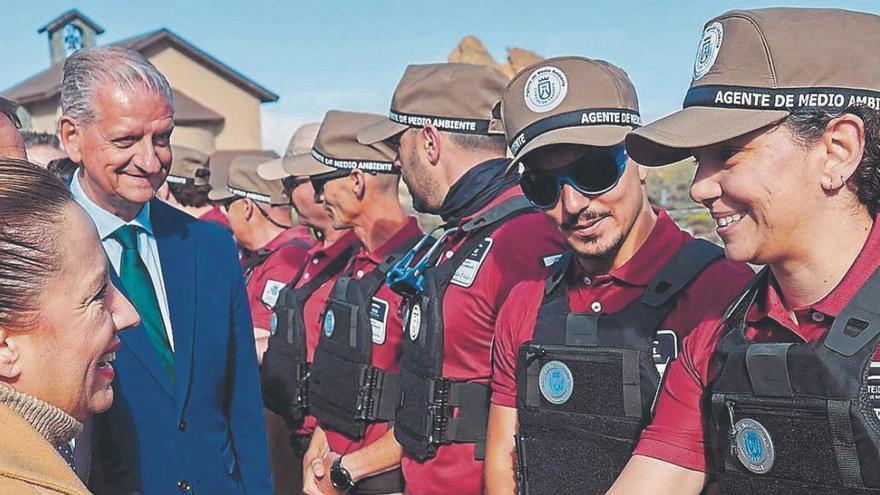
To support these efforts, the park is significantly increasing its environmental oversight. The number of environmental agents will grow to 74 by 2027—a six-fold increase. This is part of a 1.68-million-euro conservation program for 2026–2028, which will focus on restoring the environment, managing invasive species, and using drones and genetic testing for scientific monitoring. Through these measures, the Cabildo aims to strike a balance between public access and environmental protection, ensuring the long-term preservation of the Canary Islands' most iconic landmark.