
Tenerife to Modernize Granadilla Wind Farms in €20 Million Renewable Energy Push
The Technological and Renewable Energy Institute and Enel Green Power España have launched a 20-million-euro project to modernize Granadilla de Abona’s wind farms, doubling power capacity while minimizing environmental impact to support Tenerife’s decarbonization goals.
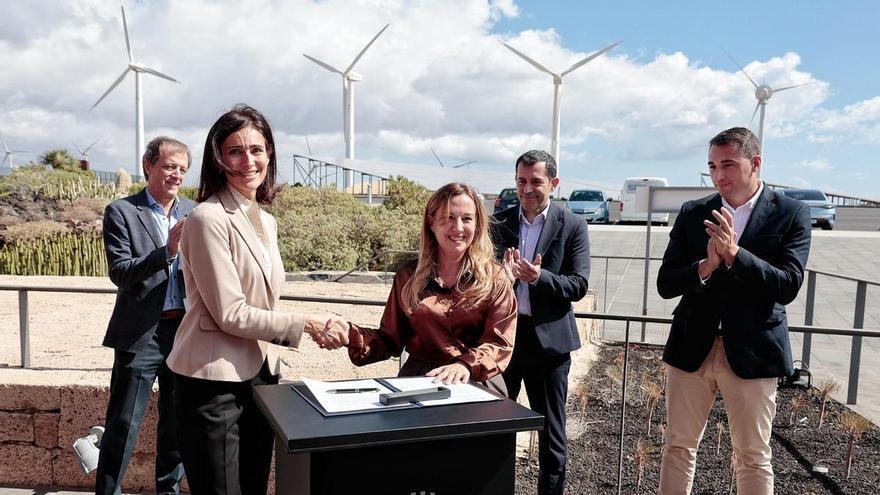
The Canary Islands’ energy transition has reached a major turning point following a new partnership between the Technological and Renewable Energy Institute (ITER) and Enel Green Power España (EGPE). The two organizations have agreed to modernize the wind farms in Granadilla de Abona—a landmark project for the archipelago—by replacing 29 aging wind turbines with five high-efficiency, state-of-the-art units.
This 20-million-euro investment aims to double the site’s power generation to 12.7 megawatts. Beyond increasing capacity, the project focuses on better land use; by consolidating the existing wind farms into a single site, the project will reduce red tape and minimize the visual impact on the landscape, which is vital for island planning. The work will be managed through the Eólicas de Tenerife group, a long-standing partnership between the public and private sectors.
Technically, the agreement involves streamlining connection permits and conducting comprehensive legal, economic, and environmental studies to ensure the new setup is viable. Tenerife Island Council President Rosa Dávila and EGPE’s Isabel Ayuso both emphasized that this modernization is crucial for boosting renewable energy without needing to develop new land, supporting the island’s broader decarbonization goals.
This upgrade is a significant step toward energy independence for Tenerife. While the ITER currently manages up to 105 megawatts—enough to cover nearly a third of local demand—the island’s electrical grid faces structural challenges. Juan José Martínez, the Island Councilor for Innovation, noted that a lack of clear national regulations on battery storage currently results in the loss of 14% of renewable energy production. Ultimately, the success of this project will depend not just on the new turbines, but on the government’s ability to approve storage systems that can capture surplus energy and move the island toward greater self-sufficiency.