
Tenerife to Conduct Volcanic Emergency Alert Drill on October 22
The Canary Islands government will conduct a large-scale volcanic emergency drill on October 22, testing the ES-Alert mobile notification system across Tenerife to improve disaster response coordination.
The Canary Islands will take another step toward improving volcanic safety on October 22. The regional government, in coordination with the Tenerife Cabildo, will conduct technical tests of the ES-Alert system as part of the VOLCANEX Tenerife 2026 simulation. This exercise aims to test how effectively emergency information can be broadcast during a geological crisis, specifically in the sensitive areas of Santiago del Teide and Guía de Isora.
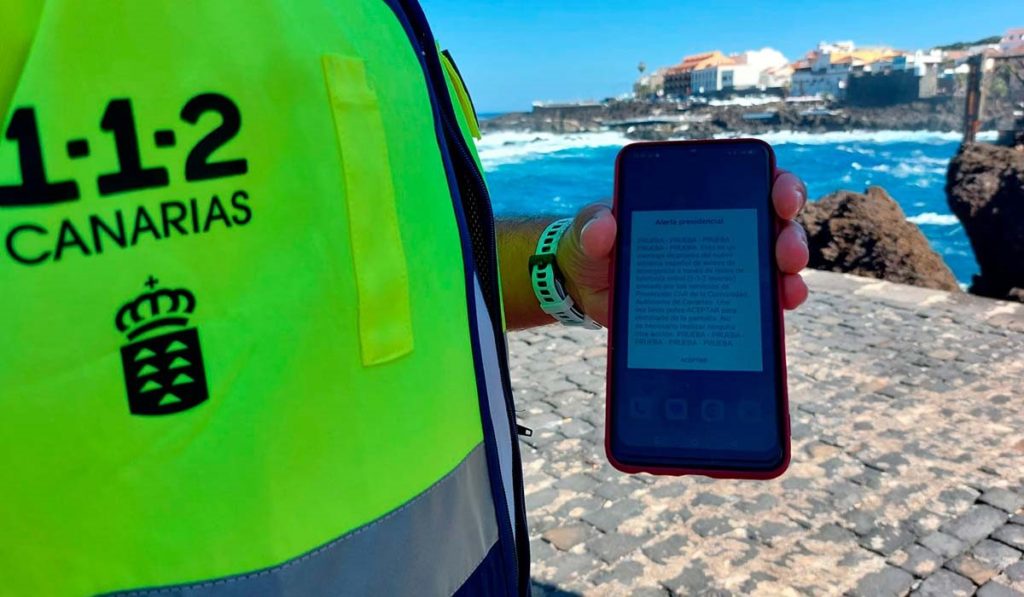
Between 9:00 a.m. and 2:00 p.m., three separate notifications will be sent to mobile devices. The first will reach the entire island, simulating a change in the volcanic alert level to orange. A second message will target the towns of Chirche and Aripe to practice a preventive evacuation, and a final message will signal the end of the exercise. Because of how radio signals travel, people on other islands or at sea may also receive these alerts. These messages are part of a drill and require no action from the public.
The ES-Alert system uses cell broadcast technology, making it a key tool for modern civil protection. It does not require users to register or install any apps. Most modern smartphones (Android 11 or iOS 15.6 and later) have this feature enabled by default, though it will not work on devices that are turned off or in airplane mode.
Beyond testing technology, the VOLCANEX Tenerife 2026 exercise is designed to evaluate how emergency services respond to large-scale disasters. Cabildo President Rosa Dávila emphasized that the drill is essential for improving coordination between emergency teams, protecting critical infrastructure, and ensuring the safety of vulnerable groups. Ultimately, the exercise serves to familiarize the public with an alert system that could prove vital during a real emergency.