
Tenerife Social Care Workers Disrupt Council Over Conditions
Workers from Tenerife's Institute of Social and Socio-sanitary Care (IASS) interrupted an Island Council meeting and protested outside, citing poor working conditions and inadequate resources for vulnerable people.
Workers from the Institute of Social and Socio-sanitary Care (IASS) stopped a meeting of the Tenerife Island Council (Cabildo de Tenerife) on Friday. They were protesting poor working conditions, citing a lack of equipment and not enough staff to care for vulnerable people on the island.
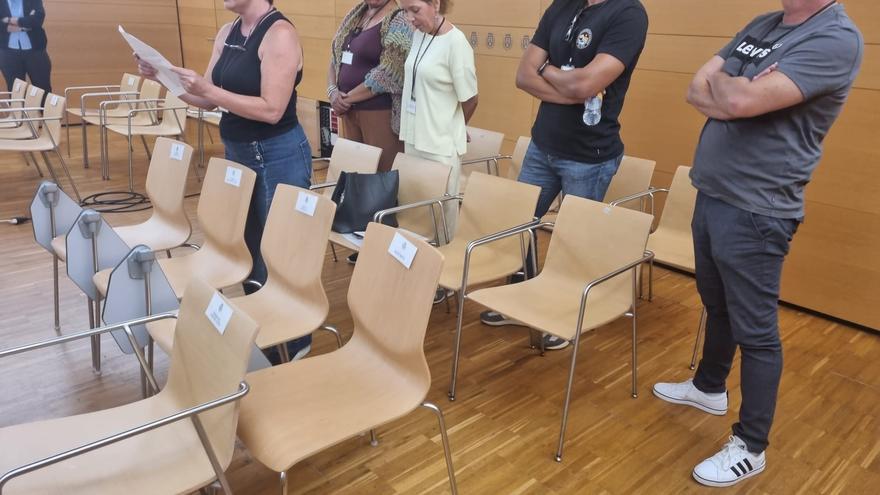
Five representatives from the IASS Workers' Committee, which is part of the island's government, stood up in the meeting hall. They interrupted the session by reading a statement from Elsa Alonso. In it, they explained their problems and demanded that the institution genuinely prioritize care for dependent people.
At the same time, about 40 IASS employees protested loudly in the square next to the Cabildo building. They chanted slogans and shouted, often targeting Águeda Fumero (PP), the island's councillor for Social Action. They had done similar protests against her predecessor, Marián Franquet (Socialist party), for most of the previous term. Both councillors often argued in council meetings, blaming each other for what was or wasn't done in the department. This familiar political back-and-forth, however, didn't directly involve the Institute's workers.
The protest outside the island's government building was organized by the IASS's main union, the Assembly of Workers of the Canary Islands (ATC). They highlighted the worsening working conditions and the "deplorable" state of care centers, particularly places like Febles Campos socio-sanitary hospital.
Their demands included: "immediate provision and renewal of necessary equipment," "sufficient hiring of qualified personnel," and a "clear and effective commitment from the authorities" to genuinely prioritize care for dependent people. This commitment should involve transparent resources, planning, and oversight.
The acting president, Lope Afonso (PP) – filling in because Rosa Dávila was delayed – was initially surprised. He later explained that he made a "personal" decision to avoid further issues by allowing the workers to read their statement, even though it wasn't allowed by the rules. The workers thanked him before leaving peacefully. The Socialist spokesperson, Aarón Afonso, warned that this set a precedent. Lope Afonso (PP) disagreed.
The governing parties (CC and PP) put forward a motion, which changed an earlier proposal from the PSOE. The Council then agreed to "urge the Government of the Canary Islands to approve and sign the new Dependency Agreement as soon as possible." This agreement is crucial for improving socio-sanitary care on the island. It affects how much is paid per care place and helps create new places to increase public services. Currently, over 18,000 Tenerife residents are on a waiting list for care, even though their right to it is recognized. There are 8,737 public care places, with IASS directly managing 546 of them.
The proposal, which was unanimously approved, calls for more services for dependent people, as well as for children under six, the elderly, and those with disabilities. It stresses that the agreement must have enough funding to ensure services continue and to help clear the waiting lists. The motion also asks the regional government to plan joint funding for building socio-sanitary centers. It also calls for a specific plan to handle emergencies and "provide a better response to dependent individuals in complex situations such as extreme residential exclusion."