
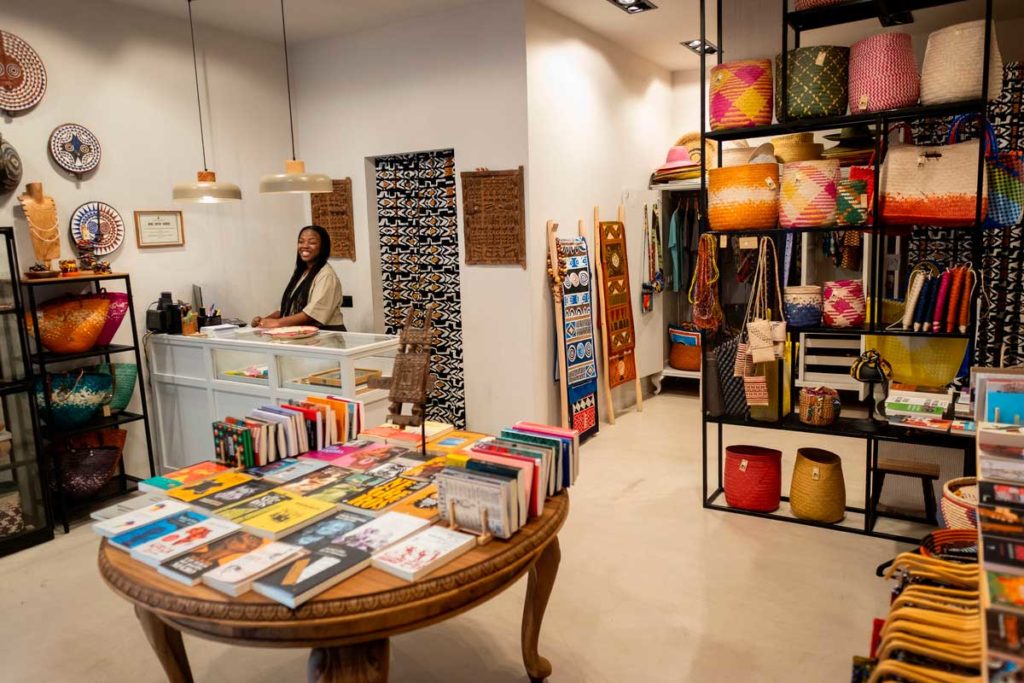
Tenerife Shop "Mulema" Fosters Black Culture and Counteracts Stereotypes
In Tenerife's capital, a new cultural hub named Mulema, meaning "heart" in Ndowé, is actively challenging societal narratives and promoting Black culture through books, crafts, and community events.
In the bustling heart of Tenerife's capital, near the Nuestra Señora de África Market, a unique energy thrives. The streets around San Sebastián Avenue come alive early with the footsteps of tourists and the buzz of local bars. Amidst this lively scene, a small shop with a wooden facade named "Mulema" stands out. Through its large window, you can see colorful African fabrics, known as pagnes, and various handicrafts.
Inside, a table filled with books immediately catches your eye. Titles like "The Danger of a Single Story" by Chimamanda Ngozi Adichie and works by Sani Ladan hint at the shop's purpose. Mulema is more than just a bookstore or a shop selling African clothing; it's a cultural hub.
Denise Biong created Mulema after the pandemic, wanting to establish a space dedicated to Black culture. "I had been thinking for a long time about creating a place that would center everything related to Blackness," she explains. Beyond selling items, the shop hosts talks and conferences, acting as a "third place" – a space for community, creativity, and connection. Denise hopes it will "change the perspective and narrative about African people."
The name "Mulema" means "heart" in the Ndowé language, spoken in Equatorial Guinea. Its central location in Santa Cruz is deliberate. "Minorities are always on the margins; that's why I wanted to open it in the center," Denise states, noting how surprising it is for some that such spaces exist where they do.
Mulema highlights how much of African culture, history, and talent is overlooked in our society. Even in the Canary Islands, close to the African coast, the continent is largely forgotten. The absence of African scientists, historical figures, and authors in public discourse leads to the question: "Have Black people never contributed anything to civilization?"
Growing up in Madrid, Denise lacked Afro-descendant role models. "When I was little, finding books by African authors was impossible. And when we appeared in literature, we were depicted as slaves." This created a harmful stereotype, suggesting a lack of intellectual capacity and a destiny for manual labor. This perception persists today, with Black individuals often seen in roles like caregiving or cleaning.
The marginalization of racialized people in Spain and the Canary Islands is evident. This lack of representation is felt in institutions, positions of power, and everyday life. Denise observes, "You walk through the market, go to the bank, to El Corte Inglés, to Castillo Street... How many Black, Roma, or Moroccan people serve you?" She shares that some people have told her it's the first time they've spoken to a Black person, finding the experience "intense."
Statistics underscore this issue. In 2024, a report showed that only 12.03% of characters in Spanish audiovisual media were racialized, with white actors dominating leading roles. Mulema aims to counter this by promoting stories and books by Afro-descendant authors. "By reading, many Black people manage to put a name to what is happening to them, realizing that it's not something unique to them, but rather systematic," Denise explains.
Mulema also offers workshops for children, fostering a space of respect and listening, always with a focus on Blackness. Denise recounts instances of tokenism, where she's invited to events but not given a voice, particularly from political parties during election periods.
Beyond systemic discrimination, Denise and others face outright racism. She shares an incident where a woman told her, "Besides being Black, you're ugly." Such comments, along with being told that Black people are "scary," are unfortunately common.
Initially, Mulema faced hostility, with feces and spit found at the door. Some viewed it as a "threatening space." Thankfully, these attacks have decreased, and many neighbors now praise the shop as a beautiful addition to the neighborhood.
Despite progress, being Black in Spain remains a challenge, marked by insults, stares, and stereotypes. Denise considers simply going out in public an "act of activism." While advocating for rights can be exhausting, she feels compelled to fight.
False narratives also circulate, such as the idea that immigrant women come to Spain pregnant to gain residency, which is untrue given Spain's citizenship laws. Similarly, the narrative linking immigration to increased criminality is disproven by declining crime rates. Denise notes that when one Black person errs, the entire community is often unfairly judged.
These harmful messages thrive in a society where, as Denise points out, vulnerable groups are pitted against each other, and immigrants are used as "puppets for hate speech and winning elections." This occurs within a context of institutional racism, where obtaining legal status and work permits can take years, despite the misinformation spread by some.
The situation for unaccompanied minors arriving in the Canary Islands is particularly dire. They are often placed in detention centers and subjected to violence, with bureaucratic delays prolonging their suffering. Denise knows of minors who have waited five years for legal documentation.
Mulema, by bringing Afrocentric narratives to the center of Santa Cruz and public discourse, serves as a powerful metaphor. Denise Biong's project is vital in a society historically shaped by white ethnocentrism. As Chimamanda Ngozi Adichie wisely states, "Stories can break the dignity of a people, but stories can also repair it."