
Tenerife Shifts Strategy as FDCAN Funding Cycle Nears End
Tenerife is shifting its strategic focus for the next decade toward housing, water security, and sustainable mobility as the Canary Islands Development Fund concludes its current project-based cycle.
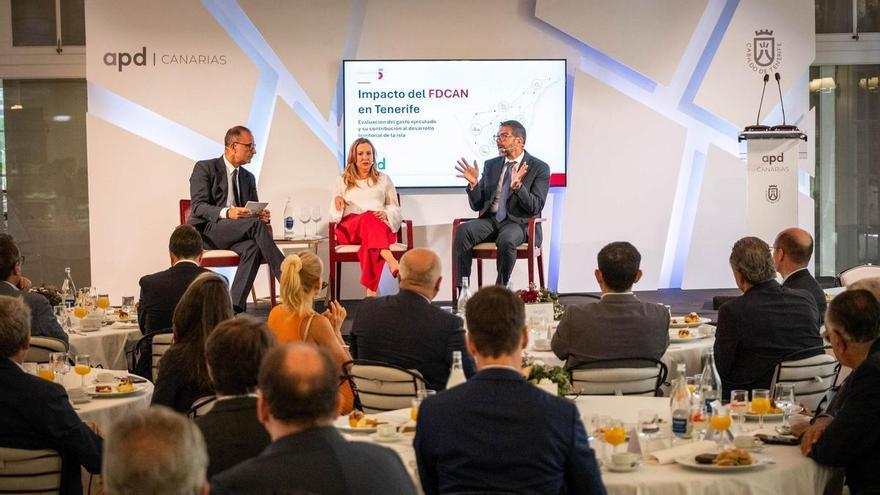
A recent forum hosted by APD Canarias at Club Oliver highlighted a major shift in how Tenerife manages public resources. As the Canary Islands Development Fund (FDCAN) nears the end of its current cycle, the island’s administration is rethinking its strategy for the next decade, moving beyond the project-based model used since 2016.
Over the past eight years, the fund has invested 1.139 billion euros across 2,734 projects and nearly 5,000 specific actions. Public works received the lion's share of this funding at 70.3%, with 429.2 million euros dedicated specifically to transport. The remaining budget supported employment programs (16.7%), as well as digitalization, innovation, and the knowledge economy.
The FDCAN originally served as a vital economic stabilizer following the recession of the mid-2010s. Now, Cabildo President Rosa Dávila is calling for a new approach as the current program concludes. Looking toward 2035, the administration plans to prioritize housing, infrastructure for an aging population, and building a more competitive local economy.
A technical report by consultant José Miguel González noted that about 706.6 million euros—nearly two-thirds of the total investment—went toward cross-cutting projects. While not the only factor, this spending has helped Tenerife maintain an unemployment rate lower than both regional and national averages, proving the fund’s effectiveness as an economic driver.
Moving forward, the island’s leadership aims to focus on long-term planning and institutional cooperation. The goal for the next ten years is to build on the progress made since 2016 by placing a stronger emphasis on water security and sustainable mobility, ensuring the island’s continued transformation.