
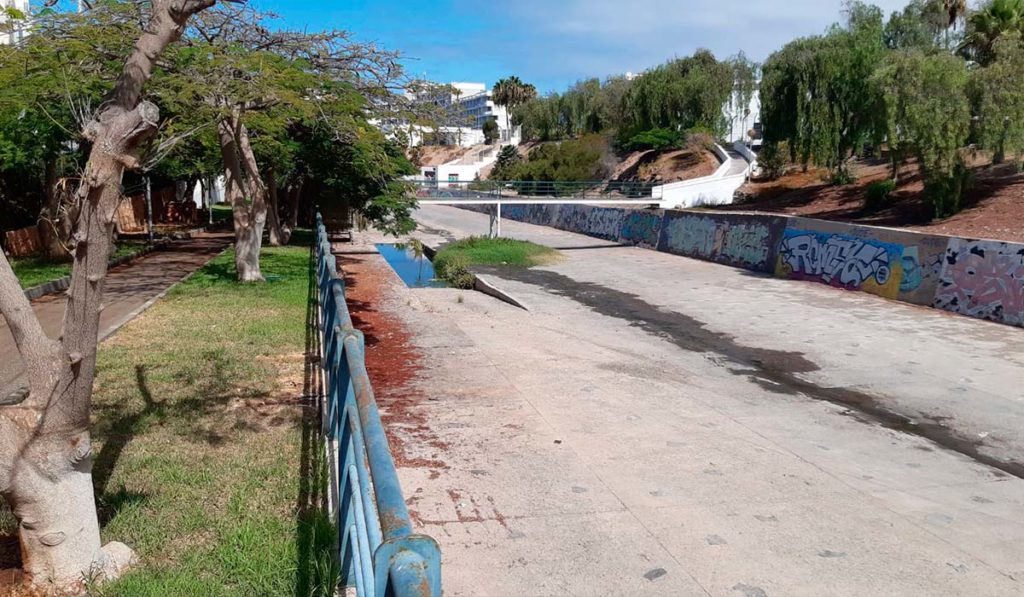
Tenerife Seeks Legal Authorization for Long-Standing Troya Ravine Spillway
The Tenerife Island Water Council has opened a public consultation to secure legal authorization for the Troya ravine spillway, a critical emergency discharge point for wastewater in the island's busy southern tourist corridor.
The management of water infrastructure in southern Tenerife is back under the spotlight. A recent notice in the Official Gazette of the Province (BOP) has opened a public consultation period regarding the continued use of the Troya ravine spillway. This move marks the final stage of an administrative process that began over 20 years ago, highlighting the ongoing challenges of maintaining shared sanitation systems between Arona and Adeje.
The Tenerife Island Water Council (CIATF) is seeking legal authorization for the facility, which was built in the 1990s. The spillway acts as an emergency relief valve during heavy rain, when the volume of water—a mix of sewage and rainwater—exceeds the capacity of the Playa de las Américas pumping station. Technical documents show the system can divert up to 153 liters per second into the sea.
This process is significant because the previous authorization expired in early 2024. Furthermore, the discharge point is located in an environmentally sensitive area known as the "Sebadales del Sur de Tenerife," a Special Area of Conservation. It is also situated near popular beaches, including El Bobo and Troya I and II. The application also covers the use of 426 square meters of public land for the underground pipeline that runs through the ravine.
The path to this stage has been lengthy. Since the CIATF submitted its application in November 2023, the regional government has requested several technical corrections and clarifications regarding operating costs. These were finalized on June 24, allowing the project to move to the current public review phase.
This is not an isolated issue for the region’s coastal sanitation network. Technical plans reveal that there are seven other emergency spillways between Costa Adeje and Los Cristianos, serving stations such as Costamar, Salinas, and El Camisón. The continued reliance on these discharge points highlights the difficulty authorities face in modernizing a system that remains essential for managing wastewater in one of the island’s busiest tourist hubs.