
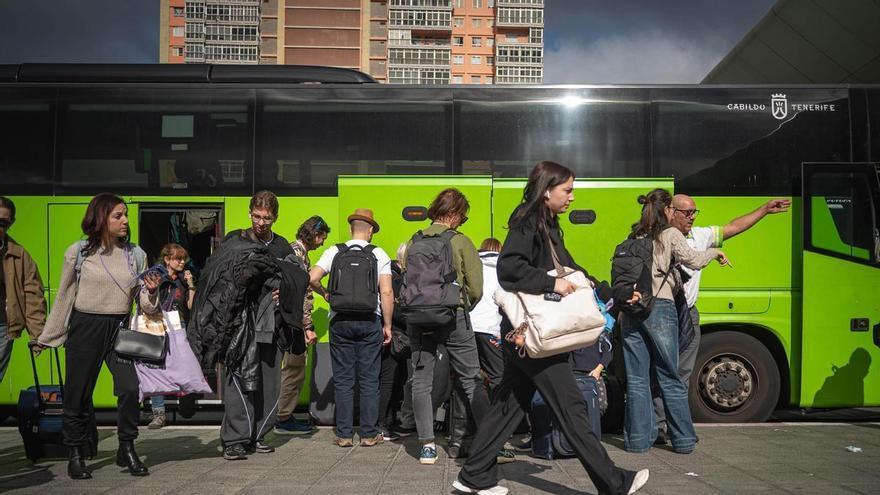
Tenerife Seeks Administrative Police Status for Public Transport Staff to Curb Violence
Tenerife’s Island Council is seeking to grant public transport staff the status of administrative police to better manage conflicts and improve safety on the island's bus network.
Security on Tenerife’s public transport is set for a major legal overhaul. The Island Council has officially requested that Titsa staff—including drivers, inspectors, and supervisors—be granted the status of administrative police. This move, long supported by unions, aims to give workers the legal authority they need to handle conflicts, assaults, and antisocial behavior, which have left many staff members feeling vulnerable.
The proposal, which will be debated at the next island plenary session, does not seek to give staff broad police powers. Instead, it is a targeted measure designed to allow employees to intervene legally when passengers break service rules or disrupt public order. This would make it easier for staff to file complaints and issue sanctions. To make this happen, the Canary Islands Government must reform the Road Transport Management Law, which was already updated last August to impose stricter penalties.
This initiative comes in response to a difficult reality on the ground. Frequent incidents, ranging from road blockades to physical attacks on staff and passengers, have shown that employees currently lack the power to manage dangerous situations while waiting for the police to arrive. The proposal is backed by a Constitutional Court ruling, which confirms that public service staff can perform surveillance and administrative duties without overstepping their legal bounds.
Beyond granting new powers, the plan includes a wider strategy to improve safety. The Council wants the public transport company to be able to act as a prosecutor in criminal cases involving attacks on staff. This is intended to deter violent behavior, particularly incidents filmed by aggressors for social media. The Council is also calling for better coordination with police, joint training programs, and public awareness campaigns.
Ultimately, officials view this as a vital step for the island. As demand for public transport grows, authorities argue that ensuring the safety and reliability of the service is essential to keeping the island moving.