
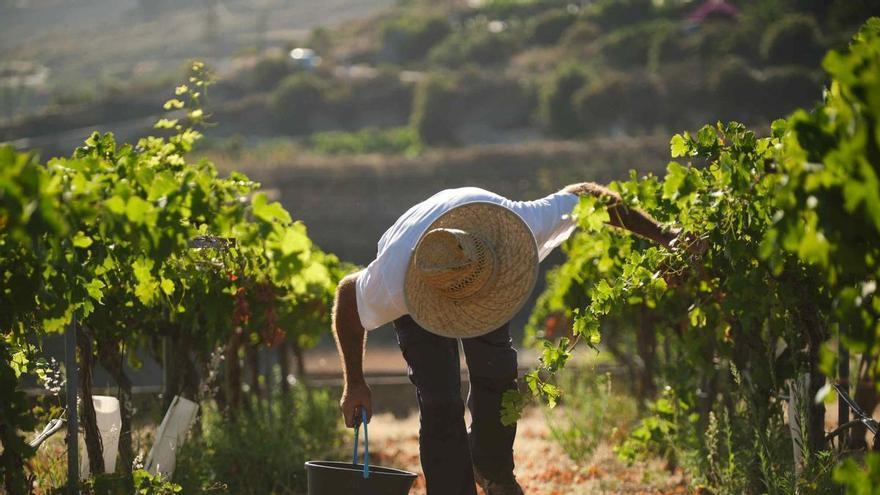
Tenerife’s Traditional ‘Braided Cordon’ Winemaking Granted Cultural Heritage Status
The Canary Islands government has moved to grant the centuries-old "cordón trenzado" winemaking technique the status of Property of Cultural Interest to preserve the unique viticultural heritage of the Orotava Valley.
Winemaking in the Orotava Valley is reaching a significant milestone that goes beyond farming—it is a move to protect the cultural identity of the Canary Islands. The regional government’s Cultural Heritage Council has officially backed the "cordón trenzado" (braided cordon) to be declared a Property of Cultural Interest (BIC). This status, which recognizes intangible heritage, provides the highest level of legal protection for this centuries-old technique.
This progress follows a formal request submitted in April 2024 by the Tenerife Island Council, supported by the municipalities of La Orotava, Los Realejos, and Puerto de la Cruz, along with the local Designation of Origin. This recognition is vital; it not only protects traditional practices from being lost but also honors a method that has survived for 300 years despite the rise of modern, mechanized farming.
The push for this status began two decades ago, as local authorities worked to document the uniqueness of the method. This effort was supported by academics and, most importantly, by the local farmers who have kept the tradition alive through generations. Research completed after the pandemic confirmed that this remains the primary method in the region, used in over 70% of active vineyards.
Technically, the braided cordon is unique in the world of wine. In this system, vine shoots are manually braided together to form a cordon raised 50 to 80 centimeters off the ground. The vines grow on their own roots rather than being grafted, and farmers use organic materials like banana fiber or rush to secure them, highlighting the deep connection between the vineyard and the valley’s natural environment.
This move toward official protection is a response to the risk of losing manual labor, which is slower and more expensive than modern alternatives. By designating the braided cordon as a Property of Cultural Interest, authorities are not just protecting a farming technique; they are ensuring the survival of a cultural landscape that defines the history and economy of this part of Tenerife, securing a legacy that has successfully stood the test of time.