
Tenerife’s Royal Casino: A Historic Cultural Landmark in Santa Cruz
Founded in 1840, the Real Casino de Tenerife stands as a historic cultural landmark in Santa Cruz, housing a prestigious art collection and serving as a vital social hub for the island.
The Real Casino de Tenerife is more than just the capital’s oldest social club; it is a cultural landmark that tracks the island’s social history since the mid-19th century. Beyond its role as a private club, the building serves as a premier museum, housing a significant collection of paintings and sculptures that are among the most important in the Canary Islands.
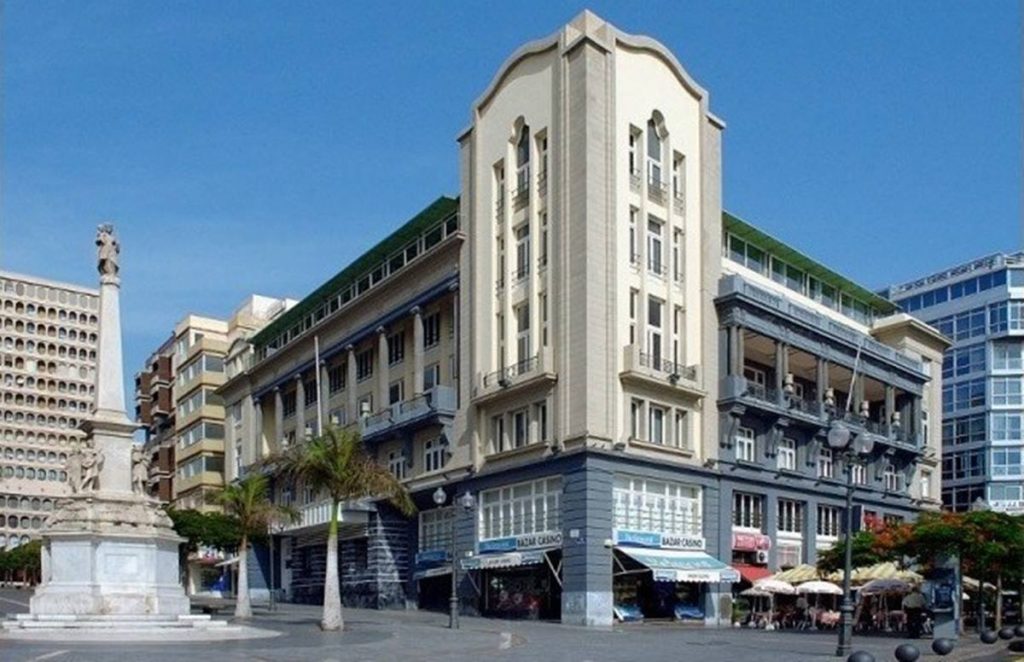
The society began in 1840, when 52 local landowners and merchants founded the "Reading and Recreation Center." After moving through several locations near Plaza de la Candelaria, the club settled into its current home in 1935. Designed by architect Miguel Martín Fernández de la Torre, the building is known for its unique blend of styles: an eclectic exterior paired with a rationalist interior. It was also designed with financial longevity in mind, incorporating commercial spaces that have helped fund the society for decades.
The building is a treasure trove of Canarian art, featuring roughly 30 works by renowned artists such as José Aguiar, Néstor Martín Fernández de la Torre, Francisco Borges Salas, Pedro González, and César Manrique, who redesigned the terrace in 1955. This artistic legacy and architectural importance have earned the Casino several prestigious honors, including the Gold Medal from the city, the Island Council, and the Canary Islands Government. In 2009, the Spanish Royal Household granted the institution the title of "Royal," cementing its status as a cornerstone of public life in Santa Cruz.
The building is also highly versatile. Its 844-square-meter Grand Hall can host everything from large cultural performances to social events for up to 2,000 people. By preserving masterpieces like Aguiar’s "Island Frieze" and Néstor’s "Triptych of the Sea and the Land," the Casino remains a living piece of urban history. Today, the society continues to thrive by offering a wide range of activities—from computer classes and Pilates to managing its extensive library and historical archives—ensuring that this historic institution remains a vital part of Tenerife’s cultural heritage.