
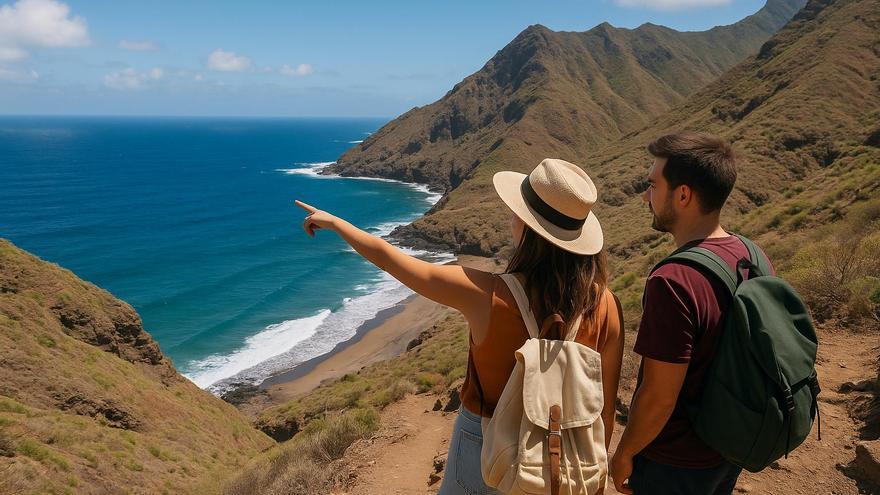
Tenerife’s Remote Antequera Beach Highlights Struggle Between Tourism and Conservation
Tenerife’s remote Antequera Beach serves as a critical case study in balancing public access with environmental conservation within the protected Anaga Massif.
A recent report on the Tenerife coastline highlights Antequera Beach as one of the island’s most unique and inaccessible spots. Located in the Anaga Massif—a UNESCO Biosphere Reserve—this 400-meter stretch of volcanic sand serves as a prime example of how to manage protected natural areas under the pressure of mass tourism.
Situated near the village of Igueste de San Andrés, the beach’s isolation is its defining feature. Because there are no roads, the area has remained largely untouched. Historically, visitors were limited to experienced hikers willing to endure a three-hour mountain trek or those arriving by private boat. This low-impact tourism stands in stark contrast to other coastal areas where infrastructure development has permanently altered the landscape.
The beach’s management has shifted over the decades. After a surge in popularity during the 1980s, which included organized boat trips and catering services, commercial activity eventually declined. However, in 2013, a water taxi service began operating, connecting the beach to San Andrés in just twenty minutes. This has made the area more accessible, allowing visitors to enjoy the scenery and local landmarks, such as the historic Igueste Semaphore.
From a sustainability standpoint, Antequera Beach highlights the ongoing struggle between public access and environmental conservation. With no basic facilities and some decaying infrastructure still present, the ecosystem remains fragile. Its preservation relies heavily on the responsibility of those who visit. For local authorities, the challenge remains: how to balance the public’s right to enjoy this natural treasure while protecting an environment that has, so far, avoided the intensive urbanization seen elsewhere on the island.