
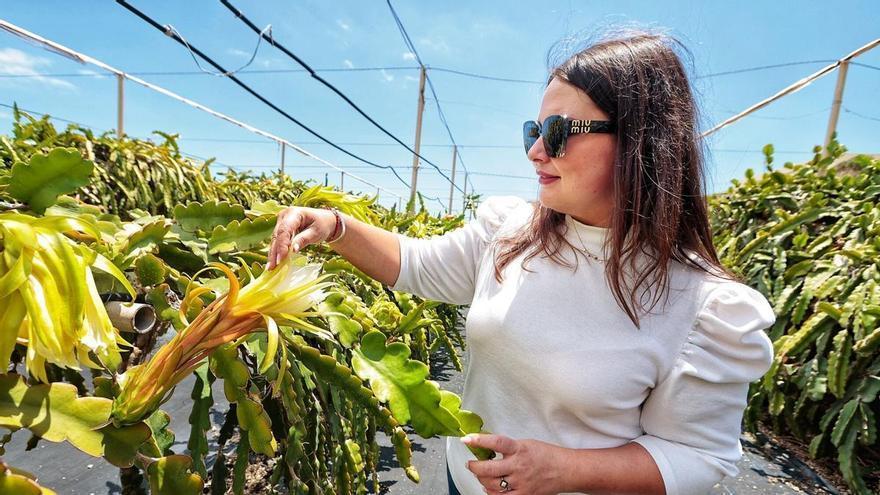
Tenerife’s Pitaber Leads Shift to Exotic Crops to Revitalize Canary Islands Agriculture
Tenerife-based family business Pitaber has successfully modernized Canary Islands agriculture by transitioning from traditional crops to large-scale dragon fruit production through strategic specialization and direct-to-market distribution.
The transformation of the primary sector in the Canary Islands is perfectly illustrated by the resilience of Pitaber, a family business based in Arico, Tenerife. As highlighted in a recent interview with El Día, the company shows how shifting from traditional crops—which have struggled to compete globally—to exotic produce can be a sustainable and profitable path forward.
The project, which now manages 50,000 square meters of dragon fruit, began as an experimental initiative by the Cabildo de Tenerife in 2005. After five years of testing different varieties, such as Queen, Dragon, Arena, King, and Fuego, the García family began intensive production in 2010. This move was not only a response to the decline of the export tomato industry but also a strategic choice to improve water efficiency, a vital concern for the islands.
Now led by Isora García, the company’s growth highlights the importance of professionalizing agriculture. A major turning point came in 2015 when the family launched their own marketing company, allowing them to bypass intermediaries and supply distribution chains directly. Today, with an annual production of 100,000 kilos, the business successfully combines financial management with field operations—a generational shift that shows how academic training is modernizing rural life.
Pitaber’s success reflects a broader trend: the need for agriculture driven by technical expertise and specialization. While farming remains challenging, the company proves that using modern tools and emphasizing the value of "Canarian-grown" produce are essential for long-term success. Their journey from an experimental idea to a key player in the local economy offers a clear roadmap for how perseverance and adaptation can secure the future of farming.