
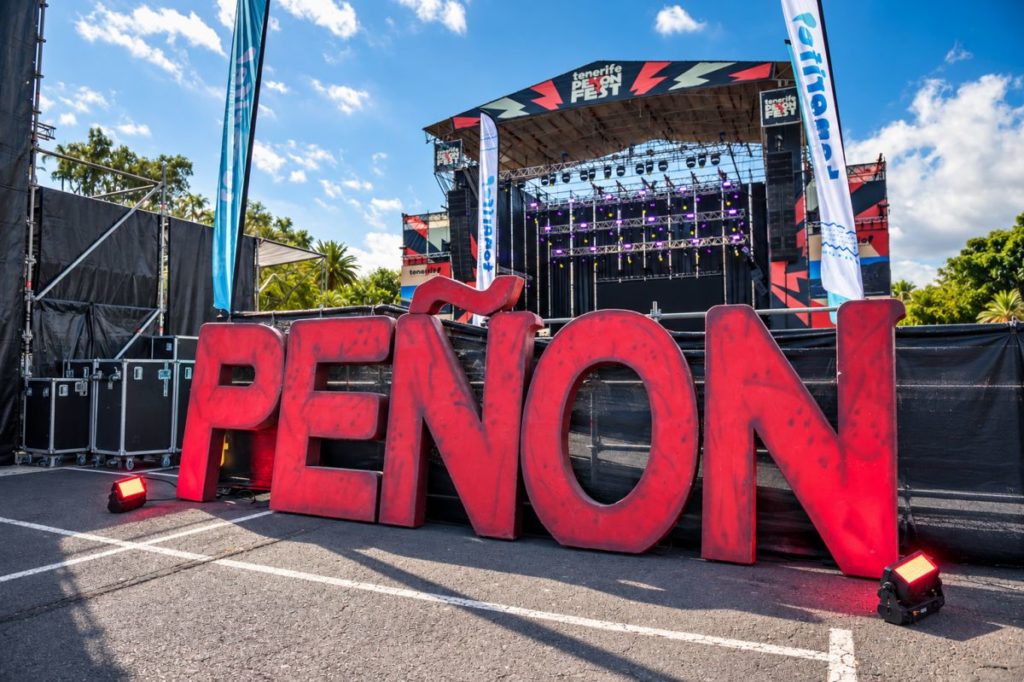
Tenerife’s Peñón Fest Redefines Festival Success Through Sustainability and Community Engagement
The Tenerife Peñón Fest has evolved into a multidisciplinary cultural project that prioritizes sustainability, local talent, and community engagement alongside its diverse musical lineup.
After eight successful years, the Tenerife Peñón Fest is proving that a music festival’s success is no longer measured just by ticket sales. Since its start in 2018, the event has evolved into a comprehensive cultural project that prioritizes quality, sustainability, and community engagement—values now expected by organizations like the Canary Islands Institute of Cultural Development.
The festival has moved beyond a simple concert lineup, offering a multidisciplinary program that includes documentary film, literature, and discussions on gender equality. By relocating to Santa Cruz de Tenerife, the festival has embraced its urban setting, notably using the Palmetum—a space once used as a landfill—as a venue to highlight its commitment to environmental sustainability.
A key part of the festival’s strategy is showcasing local talent as a central feature rather than an afterthought. Since its inception, the event has paired Canarian artists with national stars like Hombres G, Loquillo, Mónica Naranjo, and Zahara. This focus on local culture was highlighted in 2021 with a tribute to the band Los Coquillos, and it continues this year by providing a platform for local acts like Postcode to debut new music.
The 2026 lineup, featuring artists such as Amaia, Pignoise, Carlos Sadness, and Maika Makovski, balances established indie and alternative acts with emerging talent. Beyond the music, the festival has expanded its social and educational reach. Highlights for October include a screening of the Dani Fernández documentary Todo cambia, followed by a Q&A with the directors; an exhibition by photography students from the Fernando Estévez School of Art and Higher Design; and a book club focused on Nina Simone that explores music through the lens of gender and activism.
By partnering with the Food Bank and promoting environmental awareness, the Peñón Fest has transformed into an active community participant. By blending entertainment with education and social responsibility, the festival serves as a model for how large-scale events can create a positive, lasting impact on their local culture and community.