
Tenerife's Last Eruption: Chinyero Eyewitnesses and Monitoring Milestone
This Friday marks the 116th anniversary of the Chinyero eruption, Tenerife's last volcanic event, which was notable for being the first to be remotely monitored and for inspiring early volcano tourism.
Two eyewitnesses described Tenerife's last volcanic eruption to Antonio de Ponte y Cólogan, who documented the event. They recalled feeling "a strong blast and violent shaking of the earth, which left us stunned." Then, they saw "a thick column of black smoke, stones, and fire between Chinyero and Beque mountain." Faced with this terrifying sight, they "rushed home." These accounts were published in the magazine ‘Tierra y tecnología’ by the Official College of Geologists in 2009, marking 100 years since the eruption that changed how volcanic activity was studied.
The Chinyero eruption began on November 18, 1909, and was relatively short, lasting just 10 days until November 28. This Friday marks the 116th anniversary of its end. Located in the Abeque peaks, the Chinyero eruption is significant not only because it was Tenerife's last, but also because it was the first to be monitored remotely.
Antonio de Ponte y Cólogan played a key role. He went to the eruption site, using carrier pigeons to send back updates on the volcano's activity. He also took notes and photographs of everything happening, according to the National Geographic Institute (IGN).
The eruption was also scientifically studied by Lucas Fernández Navarro, a special commissioner appointed by the Ministry of Public Works for the event. This level of monitoring was a major step forward compared to the previous eruption in the Canary Islands, which happened in Lanzarote in 1825.
Records from that time show that earthquakes started in the area many months before the eruption. They became more frequent in the week leading up to it, mainly affecting the region between Icod de los Vinos and Guía de Isora. Loud noises, audible even in Santa Cruz, panicked residents who were caught off guard by the eruption.
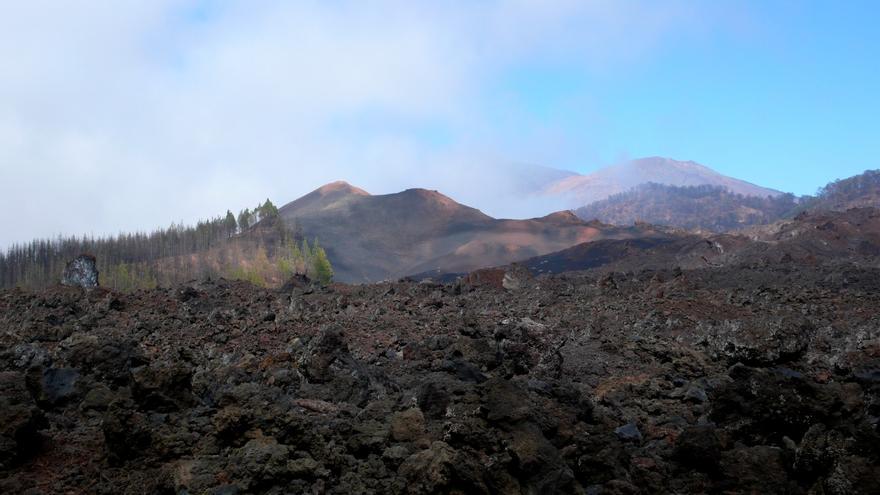
The Chinyero eruption was a Strombolian type, meaning it had several vents that erupted on and off, but it wasn't extremely powerful. When it erupted, it produced a flow of lava and a huge column of glowing ash, rocks, and gases that could be seen from other islands. All the material expelled formed an 80-meter-high cone.
The first official news of the eruption came via a telegram sent at 11:00 AM by Icod's mayor. It stated: "According to telephone reports, there are clear signs of a volcanic eruption. Southern slopes of Teide, on Las Cruces mountain."
While the lava didn't reach towns or cause any deaths, it did damage farmland and grazing areas. This forced people in nearby communities to evacuate and changed the landscape of the island's northwest. Ash from the eruption even reached towns like La Orotava, Icod, and La Laguna.
To mark the eruption's anniversary, the IGN shared some interesting details. One notable fact is that it was the first time people organized tourist trips to see a volcanic eruption. Once the initial danger passed, many wanted to witness the spectacular event.