
Tenerife's Key Projects Mired in Delays and Debate
Tenerife's major infrastructure projects, totaling billions of euros, are largely stalled or significantly delayed by bureaucracy, funding issues, and increasing public opposition, despite the island's growing development needs.
Tenerife's biggest building projects are stuck in a cycle of long delays and little progress, a recent news report reveals. Most of the island's fourteen largest projects are still in the early planning stages, a long way from actually being built. This is due to slow bureaucracy, not enough money, and, more and more, public opposition. People are questioning whether new buildings are right for an island with limited space that has seen its population grow by a quarter of a million people this century.
Back in 2022, a report highlighted nineteen huge projects expected to cost 5 billion euros. Four years on, not much has changed. Only the Teno weather radar is finished, and the Padre Anchieta pedestrian bridge is almost done after many hold-ups. The Island Ring Road and the Motor Racing Circuit are moving forward, but all other projects are still just paperwork and announcements.
Traffic jams on the Northern Highway (TF-5) are a constant problem, driving the demand for solutions. For instance, the third lane between Guamasa and Los Rodeos was supposed to start in 2017, but it's now more than a decade overdue. Recently, nine companies bid to build this 3.6-kilometer stretch, which is seen as vital for easing traffic. It has a starting budget of 66.4 million euros. Also in this area, the La Laguna bypass, a major road project costing an estimated 500 million euros, is currently being reviewed and having reports put together. This bypass aims to take traffic off the TF-5 and is a necessary step before the highway can be put underground as it goes through the city. This would turn the area into a city promenade. Extending Tram Line 1 to the airport, costing between 58.5 and 67.9 million euros, also depends on these earlier actions. It has caused debate because of its potential effect on local businesses and the city's appearance. Furthermore, the 78-million-euro Las Mercedes tunnel, one kilometer long, is in the first stage of its environmental review. It aims to improve the link between La Laguna and Tegueste.
In Santa Cruz, work is moving forward on transforming the waterfront with the Link Dock (Muelle de Enlace). Funding for this has been secured through an agreement between different government bodies. Costing 80 million euros, construction is expected to start in 2028, finally bringing to life a project first thought of in the late 1990s. At the same time, the old Santa Cruz Refinery is being taken apart. The land should be clear by 2028, ready for a city makeover that will dedicate 67% of the area to public spaces and the rest to homes and tourism. The Ofra-El Chorrillo road, unfinished since 1997, has seen sections B and C restarted with a contract worth over 6.5 million euros. This will help complete a vital route connecting the capital to the south.
The north of the island is also waiting for the Northern Train (Tren del Norte), a project costing over 1 billion euros. It aims to connect Santa Cruz with Los Realejos via 36 kilometers of track and is currently in an international design competition phase. In Puerto de la Cruz, the dock and maritime park, estimated at 92 million euros, is moving slowly after decades of efforts.
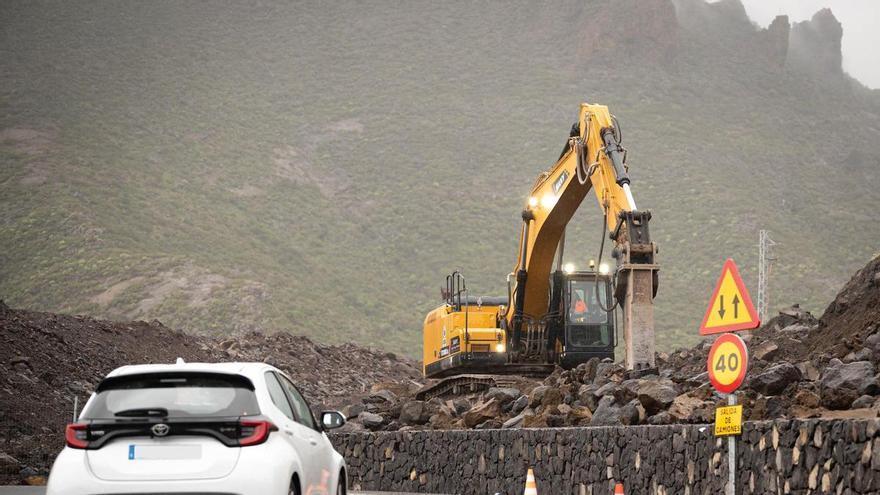
Heading south, the Island Ring Road (Anillo Insular) is making progress on the Santiago del Teide-El Tanque section. The Erjos tunnel, the longest in the Canary Islands, is a key part of this. It's expected to be operational by early 2027, though some difficult sections are still to be completed. The Port of Los Cristianos, crucial for linking with the western islands, has put out a tender for a 16-million-euro improvement and expansion project. This includes a new ferry terminal and a multi-story car park, aiming to ease daily congestion.
The Island Motor Racing Circuit (Circuito Insular del Motor) in Granadilla de Abona is still being built, despite ongoing legal issues. Its first phase costs 44.1 million euros. Tenerife South Airport will get 553.6 million euros between 2027 and 2031, mainly for a new passenger terminal. This comes after decades of calls for upgrades due to rising passenger numbers. The Southern Train (Tren del Sur), first studied in 1997, is still in a very early stage. However, a government co-funding agreement could lead to long-term deals. Its first phase, from San Isidro to Costa Adeje, will need at least 950 million euros. The Port of Granadilla will complete its Riverside Dock (Muelle de Ribera) with a 39.7-million-euro investment, allowing it to welcome larger ships. Finally, the third lane of the Southern Highway (TF-1) has been fully approved for the San Isidro-Oroteanda and Oroteanda-Las Américas sections. These will cost 126.3 and 175.5 million euros respectively, giving the TF-1 three lanes in each direction across the south of the island.
In contrast to these developments, the Port of Fonsalía in Guía de Isora has been largely abandoned. The 200-million-euro project was rejected because of its environmental impact on the Teno-Rasca Special Area of Conservation and its location in a volcanic risk zone. This decision was further cemented when the special permission that allowed construction in the protected area was removed.
Overall, Tenerife's major infrastructure projects show a mix of huge investments and ambitious plans, but also ongoing delays and an open debate about the best way for the island to develop. The Teno weather radar, which opened after a 25-year wait, serves as a stark reminder of how long these projects often take.