
Tenerife's ITER Marks 35 Years of Tech and Energy Leadership
Tenerife's Technological and Renewable Energy Institute (ITER) celebrated its 35th anniversary, marking decades of leadership in science, innovation, and sustainability with significant contributions to the Canary Islands' energy and technological development.
The Technological and Renewable Energy Institute (ITER), which is part of Tenerife's Island Council, is celebrating its 35th anniversary with a special event at its Visitors' Center. This marks three and a half decades of dedication to science, innovation, and sustainability, establishing ITER as a key leader in technology and energy development for the Canary Islands.
Since it was founded in 1990, ITER has grown from a groundbreaking renewable energy project into a diverse research center with a global presence.
The celebration was attended by important figures, including Rosa Dávila, President of the Cabildo de Tenerife; Juan José Martínez Díaz, Minister of Innovation, Research, and Development; and Carlos Suárez Rodríguez, ITER's Technical and Management Director.
At the ceremony, several key individuals were honored for their significant contributions to ITER's growth and success. These included Ricardo Melchior Navarro, Manuel Cendagorta-Galarza López, Antonio Cordobés, and Guillermo Galván.
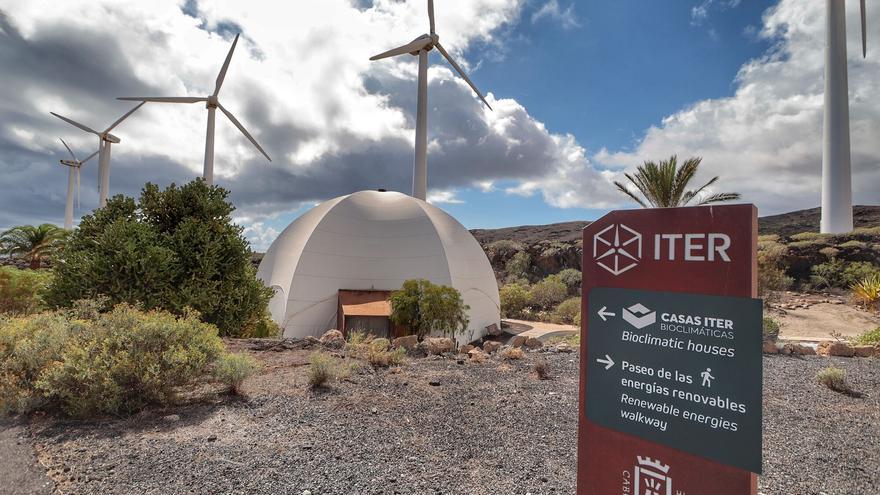
Over the years, ITER has created major projects that have changed how the island generates energy. Its facilities, which include both wind and solar power, have an installed capacity of over 100 megawatts. This makes up nearly 30% of all renewable energy capacity on Tenerife. ITER also operates sustainably and is self-sufficient, selling clean energy and advanced tech services.
Notable facilities include the D-ALiX Data Processing Center, home to the Teide HPC supercomputer, as well as the Energy Generation Control Center. ITER also has specialized labs for solar power (photovoltaics), genomics, chemistry, electronics, and robotics. With its CanaLink network and ITER Teleport, the institute helps establish Tenerife as a vital technology hub in the Atlantic, linking Europe, Africa, and America.
ITER has received international recognition, including being named a UNESCO Center of Excellence in Renewable Energies in 1999. In 2025, the Confederation of Business Owners of Santa Cruz de Tenerife (CEOE-Tenerife) will also honor ITER for its contributions to social, scientific, and environmental progress.
ITER manages over 57 million euros in research and development projects. Its programs cover renewable energies, the environment, genomics, and technology. Key initiatives include VOLTAIRE, SIROCO, PAULIA, GEOTERMAC, PRECISION-EPID, and PERSEO, which focus on areas like reducing carbon emissions, artificial intelligence, biotechnology, and monitoring the environment.
Looking ahead, ITER remains dedicated to a fair shift to clean energy, technological independence, and sustainable innovation. Its future plans involve boosting scientific partnerships, nurturing local talent, and developing technological solutions that improve the well-being and sustainable growth of the Canary Islands.