
Tenerife’s Green Hydrogen Future Hinges on Guaranteed Demand, Experts Say
Researchers at the University of La Laguna emphasize that Tenerife’s transition to renewable hydrogen must prioritize securing long-term commercial supply contracts over rapid infrastructure expansion to ensure economic viability.
The future of renewable hydrogen in Tenerife depends on more than just technical ability or available land. Recent studies suggest that the success of new hydrogen plants will not be measured by their power capacity, but by the ability to secure long-term supply contracts before construction begins. This strategy—prioritizing commercial certainty over rapid expansion—is the key lesson from the European Green Hysland project in Mallorca, which is currently being adapted for Tenerife by the University of La Laguna (ULL).
Professor Ricardo Guerrero Lemus, who leads the university’s involvement, notes that the Balearic model cannot be copied exactly. Because Tenerife has its own unique needs, the scale of hydrogen production and storage must be carefully tailored to actual, guaranteed demand. Public authorities play a vital role here; by investing in low-emission vehicles or backing specific projects, they can ensure that investments are transparent and economically sound.
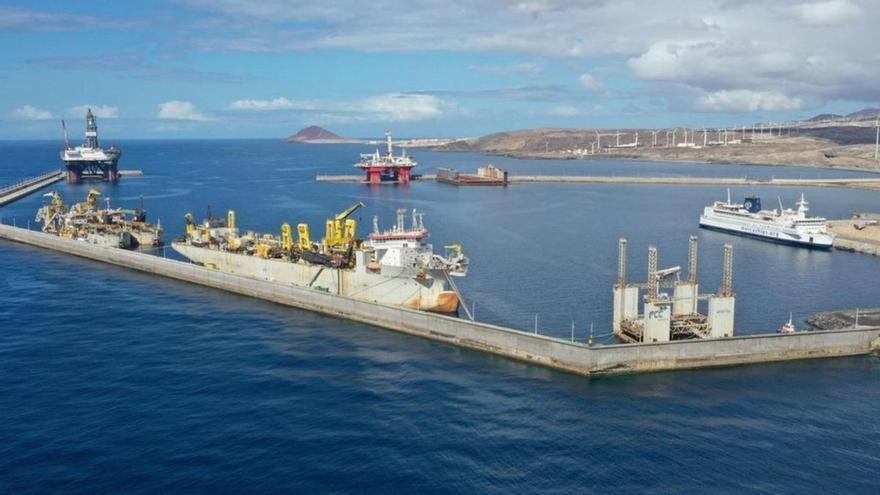
The challenge remains significant, as green hydrogen is still expensive to produce due to a lack of industrial standardization. As companies like DISA work to prepare sites at the Granadilla Industrial Estate, the focus is shifting toward how to best distribute the energy. The island must decide whether to build large, centralized facilities that require complex transport networks or smaller, decentralized systems located closer to where the energy will be used.
Ultimately, Tenerife’s energy transition must follow market logic: infrastructure should only be built to meet confirmed demand. Without firm commitments from the industrial, port, and transport sectors, there is a high risk of overbuilding. Research from the ULL since 2021 shows that before any construction starts, businesses and institutions must clearly define who will use the hydrogen, how much they need, and at what price. Demand, not just technology, must be the driving force behind the island's transition to hydrogen.