
Tenerife's 'Forestry Cent Tax' Begins Tomorrow
Tenerife's new "forestry cent tax," adding one euro cent per liter to fuel, begins tomorrow to raise €10 million annually for environmental protection, despite strong opposition from the Socialist party who call it a tax increase for residents.
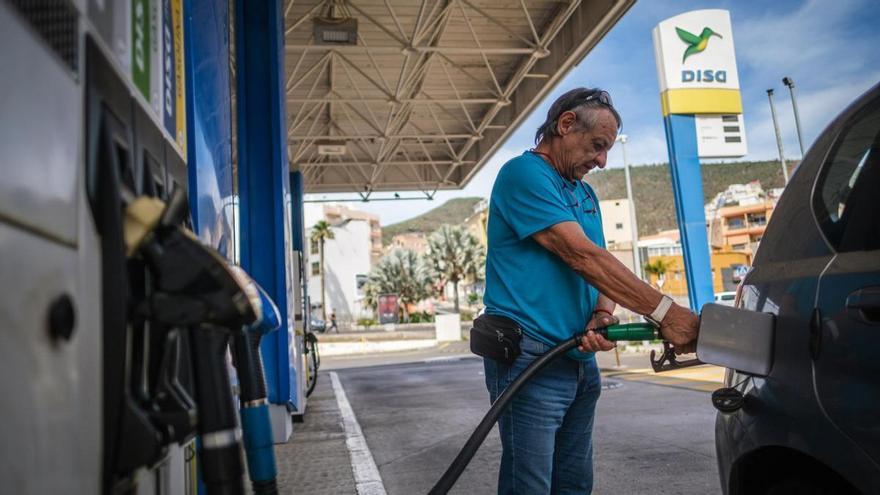
A new 'forestry cent tax' will begin tomorrow in Tenerife. This fuel tax, which adds one euro cent to every liter of petrol and diesel, is expected to raise around ten million euros each year for environmental protection on the island. Tenerife's island government, the Cabildo, has rejected all objections from individuals and groups against the tax. However, the local Socialist party (PSOE) strongly disagrees, calling it "a tax increase for all residents of Tenerife" every time they fill up their vehicles.
The Socialists oppose the Cabildo's decision, made by the ruling coalition of Coalición Canaria (CC) and Partido Popular (PP), to introduce this measure tomorrow. They argue it even disregards towns run by the PP, like Santiago del Teide. Aarón Afonso, the PSOE spokesperson in the Cabildo, highlighted that President Rosa Dávila "promised during her election campaign to cut taxes, specifically the IGIC from 7% to 5%, but has not done so." Instead, he says, she is imposing a new fuel charge on Tenerife residents, rather than a "tourist ecotax" that the Tenerife PSOE proposed to improve public services and protect the island.
Afonso stated that Coalición Canaria, backed by the Partido Popular and VOX, will approve the introduction of the "forestry cent tax." This means they are ignoring the objections raised by citizens, organizations, and town councils who warned about the negative economic impact of this new tax on the island. Afonso stressed that instead of easing the tax burden, CC and PP are choosing to increase taxes on those already struggling with the cost of living in Tenerife. He added that residents will now pay more for the essential car journeys they make for work, shopping, or medical appointments.
The Tenerife PSOE believes this decision shows that the Partido Popular is giving in to Coalición Canaria's priorities, even when it goes against the views of its own mayors. Aarón Afonso thinks the measure "pushes the Cabildo towards unfair taxes, penalizing families, self-employed people, and workers, while ignoring more progressive tax ideas like the ecotax."
Besides Santiago del Teide and individual citizens, objections also came from most municipalities governed by the PSOE. However, some, like La Matanza de Acentejo, filed their objection late.
Last September, the Socialists had already shown their opposition to the forestry cent tax. Mayors, local spokespeople, Cabildo councilors, and members of the island's executive signed a joint statement against this fuel surcharge, calling it "a regressive and unfair measure." The Socialists are urging CC and PP to adopt "fair and progressive ecological taxation." This, they suggest, should focus on improving public transport, supporting workers, self-employed people, young people, transport operators, and the primary sector, along with introducing a tourist ecotax for non-resident visitors.
According to the ruling parties, Tenerife approved the forestry cent tax "to protect its nature." It's an environmental charge of one euro cent per liter of fuel, specifically for this purpose. Juan Carlos Pérez Frías, the island's Director of Finance, said on social media at the time that "the forestry fee will not affect professional transport or goods distribution, it will be exempt in essential sectors, and will not cause an increase in the price of everyday goods and services."
This fee was first suggested by a committee of 17 independent experts from the Canary Islands Council on Climate Change. They argue it "is not an improvised political decision, but the result of technical work by professionals specializing in sustainability, biodiversity, forest management, and the environment." The forestry cent tax will be applied in both Tenerife and Gran Canaria, the most populated islands, which also have the largest number of vehicles.
The island's Governing Council approved the introduction of the forestry cent tax on July 2nd, which was then confirmed by the Cabildo's full council on July 31st. The PSOE voted against it, Vox abstained, and CC and PP voted in favour. The island government defines it as "a special charge of up to 0.02 euros (though set at one cent) per liter of petrol and diesel, solely for funding urgent environmental projects." These projects will cover nearly one thousand square kilometers of protected natural areas, which makes up 48% of the island's total land.
The forestry cent tax is included in the regulations approved by the Canary Islands Government as part of its 2025 Budget Law. Tenerife will start collecting the tax during the final two months of this year. Island officials also noted that the Cabildo of Gran Canaria, governed by the PSOE and Nueva Canarias, has approved the tax. In Gran Canaria, the revenues, "just under five million euros," will be used for "reforestation and actions in Teide National Park." Overall, the tax is expected to generate ten million euros annually in Tenerife.