
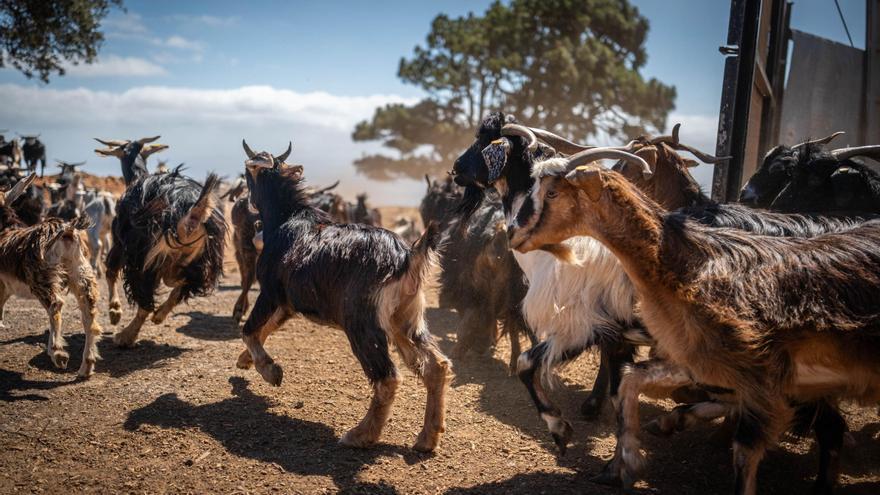
Tenerife livestock farmers complain about feed delays at the port: shortage and price increases are threatened.
Livestock farmers in Tenerife are complaining about problems with unloading feed at the port of Santa Cruz, which threatens a shortage and rise in the cost of products, and are considering alternative routes through Las Palmas.
Livestock farmers in Tenerife are dissatisfied with the operation of the port in Santa Cruz de Tenerife. They say there are constant problems with unloading animal feed. Because of this, they are considering moving the unloading to the port of Las Palmas, because prices are lower there.
This was stated by Teo Hernando from the Association of Farmers and Livestock Breeders of the Canary Islands (Asaga) and Samuel Marrero from the Livestock Council, who is also the director of Grupo Capisa, a feed producer.
They warn that due to problems in the port of Santa Cruz de Tenerife, there may be a shortage of grain for feed, and prices for it may rise. This will affect the entire province.
According to them, unloading delays are caused by poor berths, a shortage of stevedores (although this has been complained about many times) and the fact that cargo from ships that have been in port for more than two weeks is not unloaded first.
There are no such problems in the port of Las Palmas. Therefore, livestock farmers propose to unload the grain there and then transport it to Tenerife by truck on a ferry.
They demand that the authorities urgently provide more stevedores to speed up unloading. Samuel Marrero says that they have been trying to solve this problem for a year and a half, but "the situation has only worsened."
According to Hernando and Marrero, three ships with feed have been at sea for several days and cannot be unloaded. One of them even returned to Las Palmas, where there are no such problems, and will return to Santa Cruz only when everything is settled there.
Due to delays in unloading feed, which provides 90% of local livestock, companies have to pay extra money for ship downtime. The amount can reach more than 200,000 euros, as has already happened in one case.
These costs fall on the shoulders of grain importers, who, in turn, may raise prices for local products (meat, milk, eggs). This will make it less competitive compared to imported products.
In response, the Tenerife Port Authority stated that the supply of grain for livestock farmers is "guaranteed." Its head, Pedro Suárez, explained that the delays were due to an increase in traffic at the port and the process of hiring new stevedores.
He assured that the Port Authority is aware of the problem and is trying to solve it. In particular, the process of hiring 33 new stevedores has been launched, and the issue of retirement of old employees has been resolved. It is expected that another 18 people will be hired in July next year after training.
The Port Authority reminded that passengers are served first in ports, then perishable goods, and then everything else.
It was also reported that grain unloading from the ship Lady Leyla, which arrived from France, began in the port of Santa Cruz on Thursday. The work will continue until Tuesday, the 14th, and it is planned to unload 5,000 tons of grain.
Samuel Marrero from the Livestock Council acknowledged that the port of Tenerife "has been trying to attract more business in recent years and has increased traffic by 30%." But he complained about the "lack of investment and staff to cope with such growth, which leads to problems in an industry that is important for the Canary Islands."
Marrero believes that livestock farmers have the right to protest if they deem it necessary. He also believes that this problem "threatens future projects, such as pig farming and broiler breeding, which could bring profit to the archipelago."