
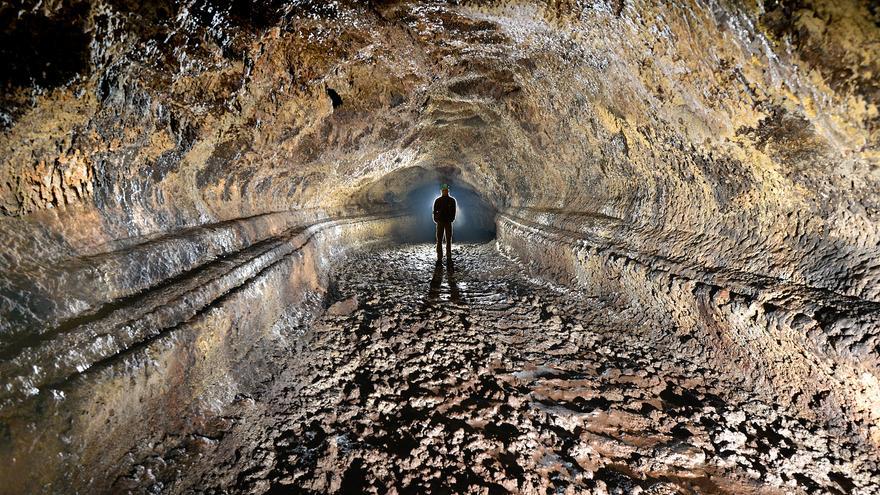
Tenerife’s Cueva del Viento Marks 18 Seasons as Global Hub for Volcanic Research
Tenerife’s Cueva del Viento, Europe’s longest volcanic tube, has welcomed over 300,000 visitors since 2006 while maintaining strict conservation measures to protect its unique geological and biological heritage.
The Cueva del Viento in Icod de los Vinos, Tenerife, has firmly established itself as a global leader in geological tourism and scientific education. According to the Diario de Avisos, the site has just completed its 18th season, having welcomed over 300,000 visitors since opening in June 2006. It remains a vital resource for understanding the volcanic history of the Canary Islands.
Geologically, the cave system is world-renowned. Stretching 18.5 kilometers, it is the longest volcanic tube in Europe and the sixth largest in the world, trailing only those found in Hawaii. Formed over 27,000 years ago by eruptions from the Pico Viejo stratovolcano, the cave features a complex, multi-level labyrinth. Research led by Esther Martín González of the Museum of Nature and Archaeology (MUNA) suggests this unique structure was created by specific terrain slopes and rapid, continuous lava flows.
The cave is also a fragile ecosystem. It is home to nearly 190 species, including 44 "troglobites"—organisms that have evolved specifically to survive in total darkness. This biological diversity makes careful management of the site essential.
To protect the environment, public access is limited to a 200-meter section of the cave. Visits must be booked in advance through the official website and are restricted to small groups of 15 people. This policy ensures visitor safety and protects the site’s natural heritage, allowing the public to explore the island’s volcanic history without damaging the delicate galleries.