
Tenerife's 'City of Cinema' Project Advances Amid Environmental Concerns
Tenerife's ambitious "City of Cinema" project, aiming to diversify the Canary Islands' economy with a massive film studio complex and thousands of jobs, faces significant environmental opposition despite being declared of "island interest."
The 'City of Cinema' project by Imagine Green Studios in Adeje, Tenerife, is an ambitious plan to boost the Canary Islands' economy. While it aims to diversify the region, it's also facing major environmental concerns. The project benefits from special tax breaks and incentives under the Canary Islands Economic and Fiscal Regime (REF), which is designed to attract big film and TV productions. This follows similar efforts like Gran Canaria Studios and earlier attempts with Dreamland in Fuerteventura and Gran Canaria.
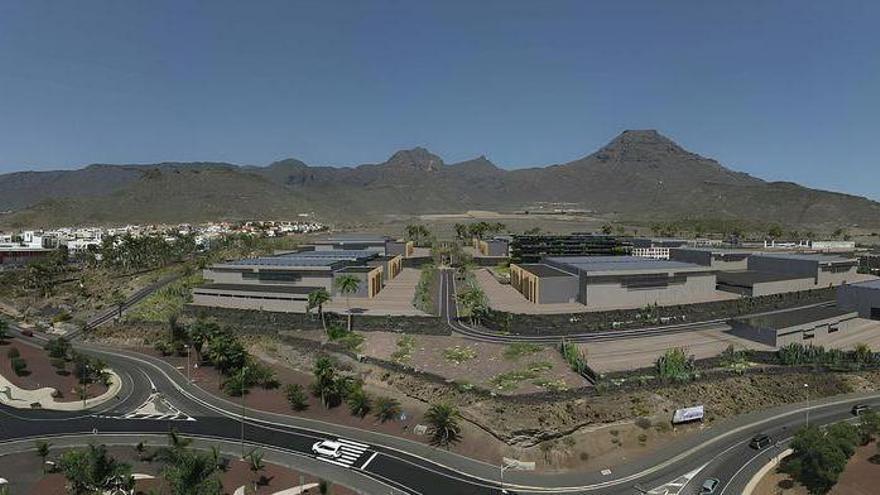
The complex will cover 400,037.58 square meters (about 99 acres) in an area known as Finca de Fañabé. It will feature thirteen filming studios, six of which are double, with ceilings 14 meters high. These studios will range from 1,625 to 3,250 square meters. A standout feature is a 2,250-square-meter indoor studio for both underwater and dry filming, said to be unique in Europe due to its specialized equipment. There will also be a 3,200-square-meter outdoor water set and a nearly 70,000-square-meter 'backlot' for outdoor scenes. Other facilities include over 35,000 square meters for support services, 4,500 square meters for building and storing sets, 9,300 square meters of offices, a 4,500-square-meter event space, 1,800 square meters for post-production, and 8,800 square meters for film and TV training, including university and vocational courses.
According to a study by Pricewaterhouse Coopers (PwC), the project is expected to significantly boost the economy. By its tenth year, it could add 689.03 million euros to the Canary Islands' economy (GDP). The plan forecasts a rise in productions, from 128 in the first year to 206 by the tenth year. It's also projected to create 15,610 jobs, with an average salary of 2,322 euros, and aims to increasingly bring more women into the industry.
However, the project faces strong opposition from the political group Sí se Puede. They are worried about several issues: the use of valuable farmland, the potential harm to migratory bird routes and shearwater colonies, and its closeness to protected Special Areas of Conservation (SACs). A major concern is the estimated annual water use of 886,585 cubic meters – that's like 355 Olympic swimming pools. Opponents argue this amount is unsustainable for an island. Imagine Green Studios Sociedad Limitada, the developers, have denied these negative impacts in their official documents.
The developers chose this location because of South Tenerife's climate, its easy access to Tenerife South Airport and the TF-1 highway, the many hotels nearby, and available services. The site itself is an old, abandoned banana plantation with no current use. It sits between Adeje town and Costa Adeje, sloping downwards in a terraced layout.
The Tenerife Island Council (Cabildo de Tenerife) declared the project to be of "island interest" in June 2023, under the leadership of Pedro Martín (PSOE). Only the Sí Podemos Canarias group opposed it. In late January this year, the Council also approved the project to begin its environmental assessment by the Tenerife Environmental Assessment Commission (CEAT), which is the stage it is currently in.
Both the Adeje City Council, represented by Manuel Luis Méndez (Councilor for Presidency and Territorial Planning), and the Tenerife Island Council, through Alicia Leirachá (Island Director of Strategic Projects), have defended the project. They see it as a chance to diversify the economy and create skilled jobs, highlighting the need for alternatives to tourism, especially after the pandemic showed how vulnerable the current model is. The Adeje council also believes the site is ideal for revitalizing an unused area and making it productive for the community.
Architect Joaquín Torres and his internationally recognized firm, A-cero, Torres y Llamazares, are responsible for the project's technical design.