
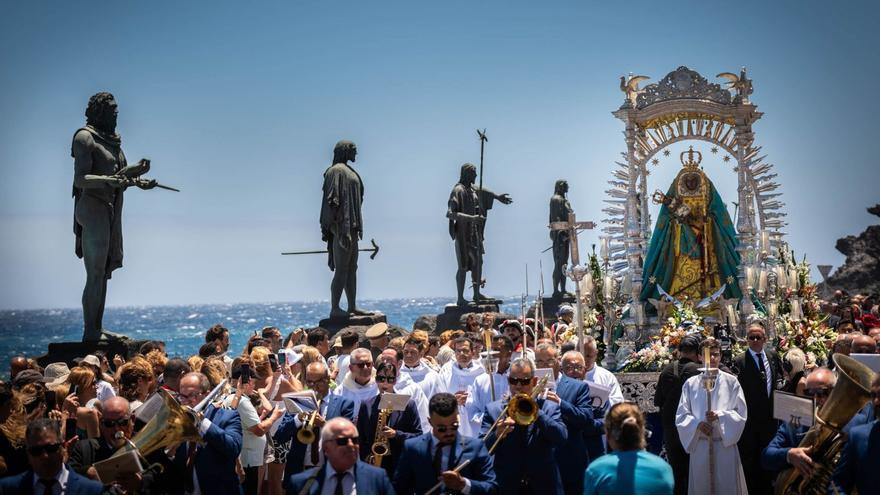
Tenerife’s Candelaria Pilgrimage Blends Catholic Tradition with Ancient Guanche Roots
The annual August 15th pilgrimage to Candelaria in Tenerife represents a unique cultural synthesis, blending Catholic devotion with the ancient Guanche harvest festival of Beñesmén.
Every August 15th, Tenerife sees a massive pilgrimage to Candelaria that highlights a unique blend of Catholic faith and the island’s pre-Hispanic roots. Recent studies suggest this event is not just a modern religious gathering, but a meeting point between Christian tradition and ancient local customs.
Historical analysis shows that the timing of this celebration is no accident. Before the Spanish conquest, the island’s original inhabitants, the Guanches, celebrated "Beñesmén," a festival marking the end of the harvest and the start of a new year. While experts note that the two celebrations are not identical, they agree that their meanings overlap. Over time, elements of the Guanche worldview were woven into the devotion to the Virgin of Candelaria, creating a lasting cultural blend.
According to 16th-century records, the statue of the Virgin—depicting a woman holding a child and a light—was discovered on Chimisay beach around 1400. Because this happened before the conquest was complete, the Guanches initially venerated the image through their own cultural lens, often linking it to their goddess, Chaxiraxi.
While the Catholic Church officially celebrates Candlemas on February 2nd, August 15th has become the most significant date for the people of Tenerife. This date, which coincides with the Assumption of Mary, serves as a link to the ancient Beñesmén, a time historically known for community gatherings and celebrations of abundance.
Although it is difficult to reconstruct these ancient rites with total accuracy because most historical records were written after the Spanish occupation, the tradition remains strong. The ongoing pilgrimage to the basilica and the cave of San Blas—formerly known as the cave of Achbinico—shows how the island’s collective memory has preserved the symbolic importance of this month for centuries.