
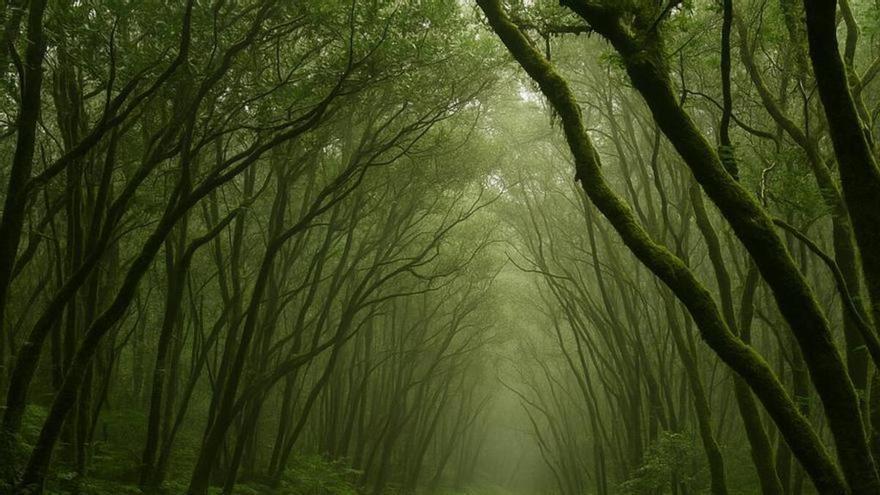
Tenerife’s Bosque del Adelantado: A Model for Urban Forest Integration
The Bosque del Adelantado in La Esperanza, Tenerife, serves as a unique model for urban planning by successfully integrating a rare primary laurel forest into the heart of a town.
Protecting nature in crowded cities is one of the biggest urban planning challenges of our time. The Bosque del Adelantado in La Esperanza, Tenerife, offers a perfect example of how to integrate a primary laurel forest into an urban environment.
Spanning roughly 25,000 square meters at an altitude of about 860 meters, this forest is a rare ecological gem. Unlike larger protected areas in the Canary Islands, its uniqueness lies in its location, nestled right between the town’s old city hall and the local parish church. Biologist Richard Pott has identified it as a vital primary forest, noting its remarkable ability to survive despite centuries of human activity.
The forest’s survival dates back to the widespread deforestation that once cleared much of the Canary Islands for farming. This specific ravine was spared because it served as a local source of timber and acted as a natural boundary between neighborhoods. Between 1994 and 1998, a major restoration project—supported by local, regional, and European funding—helped restore the native plants and improve the area’s walking paths, officially establishing it as a "biodiversity corridor."
The site also holds deep historical significance. Its name honors Alonso Fernández de Lugo, who, according to local tradition, spotted the royal camp of Añaza from this spot following the battle of 1494. He is said to have promised to build a hermitage here dedicated to the Virgin of Hope, adding a layer of cultural history to the forest’s botanical value.
What sets the Bosque del Adelantado apart from other green spaces in the region is its formal legal status and dedicated management. It remains the only example in the Canary Islands of a laurel forest fully integrated into the heart of a town. It serves as a successful model, proving that urban development and the protection of native ecosystems can work together to create a more sustainable future.