
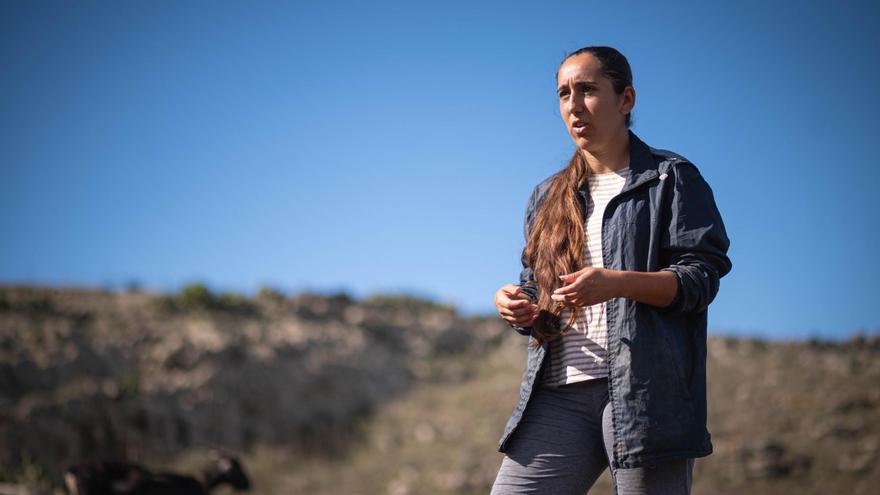
Tenerife's Antonia González Upholds Family Cheese Tradition
Antonia González, a young goat farmer in Teno Alto, Tenerife, is committed to preserving her family's traditional artisanal cheese factory and its deep-rooted legacy despite modern challenges.
Antonia González, 26, speaks with conviction. She is dedicated to preserving Los Dornajos, the traditional cheese factory her grandparents established in Teno Alto. Her education, a vocational course in animal care and livestock management in Fuerteventura, perfectly complements her work. "I do this because I choose to," she explains confidently, "I could easily work with other farm animals." She is the inheritor of everything Los Dornajos represents: its goats, its remote location, the hard work, the cheese, the tradition, and the family legacy.
This young goat farmer from the mountain village of Buenavista del Norte took over the farm to continue making artisanal cheese. "Goats have been here since my great-grandparents' time," she shares. "Here" is Teno Alto, a special place nestled in the massif, a region that marks one of Tenerife's geological beginnings. This deep-rooted livestock tradition has been passed down through generations. After her parents, who still work alongside her, it's now Antonia's turn. Her brother is currently away studying.
The artisanal quality of González's cheese is highly valued. "Even with my training and all the modern technology available, we chose to keep everything as traditional and old-fashioned as possible," she explains, "so this way of doing things doesn't disappear." She acknowledges that innovations could "help us," but emphasizes their commitment to tradition. "Our goats graze all day and are free all night and day," she says, reflecting an ancient pastoral method.
Antonia believes starting a new goat farm with artisanal cheese production in Teno Alto is almost impossible. "No one is going to come here to start this kind of business. If I didn't continue it, it would be lost," she laments. Despite this, she encourages anyone passionate about livestock farming to try. "You need patience," she advises. "When you start, there are promises of lots of aid and subsidies, and you might dream of a huge farm. But it's not like that. Then come the strict requirements, and subsidies are approved but the money doesn't arrive, leaving you in limbo." She speaks from the personal experience of someone who grew up surrounded by goats.
With about 70 goats, Antonia and her parents manage the grazing themselves. "It's a 24-hour job," she explains. "We take turns, and everyone needs to know how to handle all the different tasks involved in running an artisanal cheese farm."
As the first rains arrive, pasture is scarce. Antonia feeds her goats away from the farm, reducing their reliance on commercial feed. This also helps keep the nearby gardens clean, and the animals' manure is utilized. "They graze freely at the edge of the cliff," she notes.
Strategy and timing are crucial to Antonia's farming approach. She plans for the goats to give birth around the end of the year, coinciding with the availability of tender grass. This way, when the young goats stop suckling, they have good quality pasture to eat. "If the grass is too dry and tough, changing their diet becomes very difficult for them," she explains.
The biggest challenge to this careful timing is climate change. "It's complicated," she admits. "If I've noticed less rain, I can only imagine what my father has seen. Barely any water falls, and that's a huge problem. If it doesn't rain and there's no pasture, we can't do anything here." The difficulties don't stop there. While goats could eat commercial feed, "bringing it from Santa Cruz is expensive. With the war in Ukraine, which you think won't affect you because it's so far away, food prices more than doubled," she recounts. She understands that the world is shrinking, making Teno Alto feel less remote than it once was.
When asked if she's happy on her grandparents' farm, Antonia González offers a nervous smile. "Yes," she says, taking a breath. "I'm as happy as can be. I wouldn't want to leave. If I do, it would only be because I had no other choice, and I'm really hoping this works out." She's taking a chance, and she urges others to support local businesses. "People need to support local products," she insists. "I don't know how products from elsewhere are made, but what comes from here is clearly as natural as possible."
She then explains her cheese-making process: using raw milk, production begins less than two hours after milking. By the next day, Los Dornajos cheese is ready for sale. "It's as fresh as possible," she states. She also emphasizes that the goats are left natural, with the young suckling directly from their mothers. This traditional approach, she notes, requires very strict inspections and quality controls, as they rely on older methods and records.
Antonia's grandmother is María del Rosario Regalado, known as María from Los Dornajos. She was one of the "seven Marías" of Teno Alto, a recipient of the Tenerife Rural 2020 award, and her farming work was even featured in a documentary. It seems the Los Dornajos cheese factory isn't the only thing Antonia inherited from her grandmother; she also gained her strength, tenacity, and deep love for Teno Alto and its goats.