
Tenerife's Anaga Park: UNESCO Biosphere, Europe's Endemic Species Hotspot
Tenerife's Anaga Rural Park, a 2.5-million-year-old UNESCO Biosphere Reserve since 2015, is celebrated as Europe's richest area for unique species and a living link to the Tertiary era.
Anaga Rural Park, found in the Anaga Mountains of Tenerife, is incredibly important for its natural environment. It was named a UNESCO Biosphere Reserve on June 9, 2015. This international award highlights its value as the European area with the most unique species found nowhere else. This special feature led to its earlier recognition as a Natural Park in 1987 and then a Rural Park in 1994, under the Canary Islands' natural spaces laws.
Anaga is over two and a half million years old. It covers 48,727 hectares, taking up 76% of Santa Cruz de Tenerife, 16.6% of San Cristóbal de La Laguna, and 6.5% of Tegueste. Around 2,500 people live in about twenty small communities within the park, including Taganana, Taborno, Afur, Roque Negro, Chamorga, La Cumbrilla, Lomo de las Bodegas, Almaciga, Casas de la Cumbre, Catalanes, Benijos, El Draguillo, Las Palmas de Anaga, Igueste de San Andrés, San Andrés, María Jiménez, Valleseco, Las Carboneras, Los Batanes, Chinamada, Bejía, and El Río-Cabeza de Toro. This area is a stunning, ancient landscape, a living link to the Tertiary era. It also has deep cultural importance, with people living and farming there since aboriginal times.
Anaga's variety of life is outstanding, thought to be the richest in Europe. Its plants range from coastal types like cardones (Canary spurge) and tabaibas (euphorbias), to junipers, dragon trees, and palm trees found at mid-altitudes. Higher up, you'll find dense subtropical laurel forests. This forest ecosystem, made up of laurels, viñáticos, barbusanos, lindens, heathers, hollies, and beeches, is a vital home for unique birds such as Bolle's pigeon and the laurel pigeon. Other birds like Egyptian vultures, kites, finches, and common tits also live here.
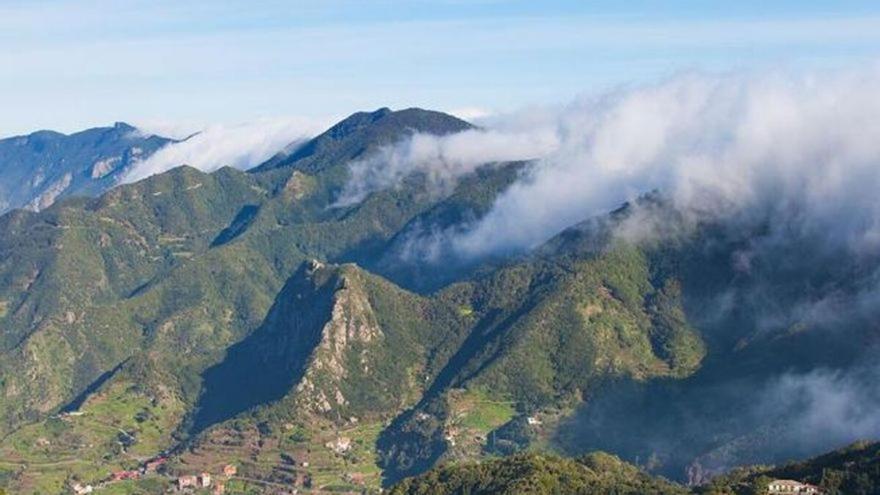
Thanks to its location and high peaks, Anaga is one of the wettest places in Tenerife. Its ecosystem thrives on the humidity carried by the trade winds, which form the famous "sea of clouds." The leaves of the plants act like sponges, catching this moisture in what's called "horizontal rain." This soaks the soil and refills underground water sources. This steady water supply allows for a huge amount of plant and animal life, creating a complex natural balance where every species is important. Because little sunlight reaches through the thick forest canopy, the undergrowth is rich with mosses, lichens, ferns, and jibalgeras.
The Anaga Mountains offer many different environments, from the heart of the deep forest to peaceful spots with fern-covered caves and springs flowing through tunnels of fayal-heather woodland. Some popular places to visit include Llano de los Viejos, which was the island's first recreational area; the Lomo Alto or Jardina viewpoint, offering wide views of the Valle de Las Mercedes; Cruz del Carmen, home to a Visitor Center; Pico del Inglés, with a 360º viewpoint showing the vast park landscape, Santa Cruz, La Laguna, the Esperanza ridge, and Teide; and hiking trails like the "Path of the Senses," designed for people with motor or sensory disabilities.
Historically, Anaga's forests were heavily used. Until the early 20th century, wood was cut for building homes, boats, farm tools, and furniture. After the war, a lack of fuel meant people often secretly cut firewood for their homes and to make charcoal. While forest rangers sometimes overlooked this due to the tough economic times, the Civil Guard enforced the rules strictly, leading to many arrests and complaints. This strain on the ecosystem prompted the Cabildo de Tenerife (Tenerife Island Council) to take over control and protection of the forest from 1992. This move successfully stopped the damage to the forest caused by human activity.
For centuries, naturalists visiting the Anaga Mountains have praised its unique beauty. Sabino Berthelot, in his book Misceláneas Canarias, gave a vivid description of the atmosphere, colors, and feelings inspired by Tenerife's laurel forest.