
Tenerife's 2035 Transport Plan Prioritizes South Train, North Line Delayed
Tenerife's updated Sustainable Mobility Plan prioritizes a southern train and road improvements by 2035, while excluding a northern train due to its early development stage.
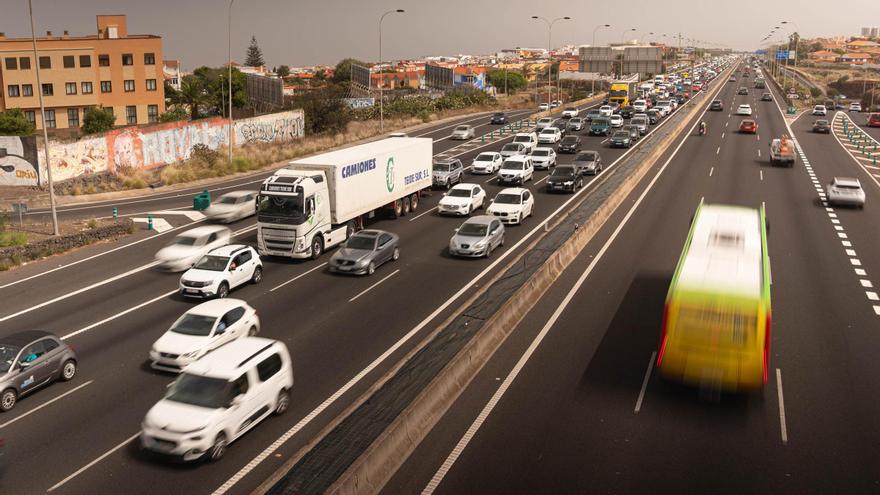
Tenerife's plan to solve its traffic problems by 2035, called the Tenerife Sustainable Mobility Plan (Pimsit), will include a train in the south of the island but not one in the north. This is a key change in the updated plan, which is now available for public feedback.
The plan prioritizes projects based on transport needs and cost-effectiveness. The northern train line was excluded because the project is still in the early stages. According to the plan, it's only in the initial approval phase and hasn't been finalized.
The plan acknowledges that the local government, through Metrotenerife, held a competition for ideas to develop the northern train, showing interest in the project. However, the route and design are still undecided, pushing its completion beyond the 2035 timeframe of the Sustainable Mobility Plan.
While the northern train could significantly improve public transport on the island, the southern train is considered a higher priority by the current local government.
The inclusion of the southern train in the updated plan is significant because it wasn't a priority in the original draft. This change comes as the Spanish government has agreed to help fund the project through the national budget.
On September 4th, the Spanish government, the Canary Islands government, and the Tenerife local council signed an agreement outlining the initial steps for building the southern train line, which will connect Santa Cruz and Adeje.
The project, estimated to cost 2.333 billion euros, aims to reduce traffic congestion on the island. However, some concerns remain, including the high cost and the fact that, despite advanced planning, construction hasn't started yet.
The plan states that the project's success depends on securing appropriate funding. It also notes that progress has been made in developing a long-term agreement with the national government to ensure the necessary financial resources.
Besides the southern train, the Sustainable Mobility Plan focuses on improving existing transport options like buses and trams. It also includes significant investment in road expansion (1.898 billion euros) and park-and-ride facilities to encourage people to leave their cars, especially single-occupancy vehicles, outside city centers.
The plan recognizes that simply expanding roads won't solve traffic problems in the long run. Improvements must prioritize public transport, especially on the busiest sections of the northern (TF-5) and southern (TF-1) highways.
Main Projects:
The plan includes several major road projects:
- Insular Ring Road (San Juan de la Rambla-La Guancha-Icod): 174 million euros for a new road that bypasses the TF-5, including tunnels.
- Insular Ring Road (El Tanque-Santiago del Teide): 241 million euros to improve connectivity between the north and south, reducing congestion on the TF-5.
- Fourth Lane of the Insular Ring Road (Santiago del Teide-Guía de Isora): 74 million euros to add a lane in each direction, turning this section into a highway.
- Underground Section of the TF-1 in Adeje: 106 million euros to bury three kilometers of the TF-1, creating a boulevard with pedestrian areas, bike lanes, and green spaces above.
- Third Lane (Güímar-San Isidro): 100 million euros to extend the existing three lanes on the southern highway.
- Third Lane (San Isidro-Los Cristianos): 110 million euros to add a third lane to the southern highway, requiring modifications to junctions.
- Access to the Port of Los Cristianos: 7.5 million euros for a new access road to alleviate congestion.
- Third Lane (Guamasa-La Orotava): 277 million euros to add a third lane in each direction on the northern highway.
- Bus-HOV Lanes (North and South): 232 million euros to create dedicated lanes for buses and high-occupancy vehicles on the northern and southern highways.
- TF-5 Bypass in La Laguna: 332 million euros for a new highway that bypasses the airport.
- Mesa Mota Tunnel: 78 million euros for a one-kilometer tunnel connecting La Laguna and Tegueste.
- Outer Road or Western Ring Road: 167 million euros to connect the TF-1 and TF-5 highways, reducing traffic in the metropolitan area.
- Southern Train (Santa Cruz-Adeje): 2.333 billion euros to build a train line along the coast, with seven stations.
The plan emphasizes integrating improvements to the road network with public transport. The primary goal is to create a connected transport system that integrates buses, trams, bicycles, walking, and potentially rail. This system aims to improve connectivity and promote a unified vision for the island. The plan will focus on managing and promoting public transport by increasing services and coverage.
The plan also includes extending the two tram lines. Line 1 would be extended to Tenerife North airport, improving connectivity and serving communities outside La Laguna.
This extension is already included in a previous plan and is considered important for Tenerife. It would improve access to the airport, which served almost seven million passengers in 2024, and serve neighborhoods outside La Laguna.
Line 2 is planned to be extended to connect the neighborhoods of La Cuesta and La Gallega, sharing infrastructure with line 1 in some sections. This extension would serve other densely populated neighborhoods in the Metropolitan Area.
The project for drafting the construction plans is currently underway. A third tram line between Santa Cruz and Las Teresitas beach is not included in the priority projects.
Overall, the plan includes over 4.3 billion euros in public investment. This is more than four times the annual budget of the Tenerife local council and equivalent to the cost of building 12 large hospitals.