
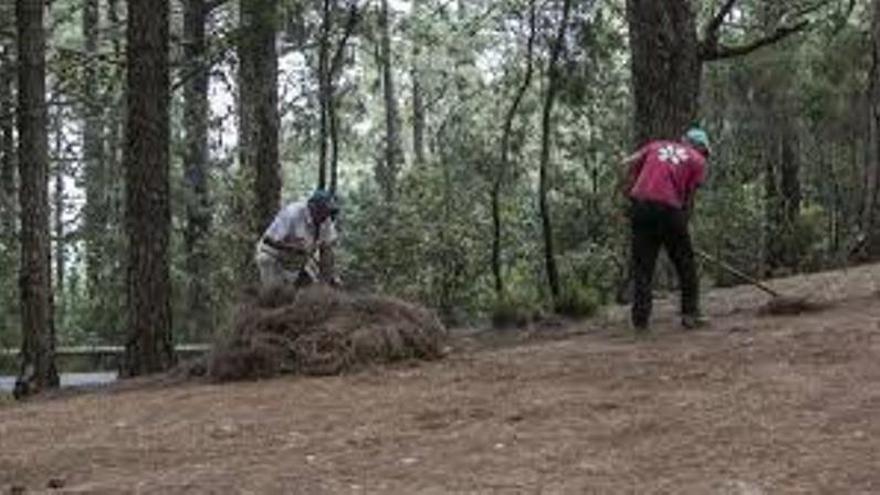
Tenerife Revives Pine Needle Collection for Fire Prevention
Tenerife's Island Council is reviving the traditional practice of pine needle collection through permits and commercial auctions to prevent forest fires and promote sustainable resource management.
Tenerife's Island Council is bringing back the traditional practice of collecting pine needles. This is a key part of their plan to prevent forest fires. The goal is to clear away flammable material in the forests and also to encourage using the island's natural resources in a sustainable way.
The Island Council's Natural Environment department wants to clear up a common misunderstanding: people can collect pine needles. While it's not banned, you do need permission first. This permit process is handled by local town councils, who own the forests. It's described as easy, free, and lasts for one or two years, depending on the area. Permits are only given for specific zones to make sure the collection is organized and respects a practice that has long been part of the island's farming and livestock traditions. However, collecting pine needles is forbidden in places hit by the big forest fire in 2023, like the dorsal ridge and parts of the Orotava Valley. In these areas, pine needles are crucial for protecting the soil from erosion and helping the ecosystem recover. If you own private land with pine forests, you can collect needles by simply submitting a responsible declaration.
Besides individual collection, the Island Council also holds a yearly auction for pine needles from its own forests. These are sold to companies that use them for farming or as bedding for animals. The next auction will be on Tuesday, the 24th, at 11:00 AM, in the Santiago Martín Pavilion auditorium, where the island's Environment department is located. This event is part of the 2026-2027 Biennial Forest Exploitation Plan. This plan outlines how much can be collected, how bids are awarded, starting prices, collection methods, and the exact areas where work can take place.
This time, three separate lots of pine needles will be auctioned:
- Lot 1: From Monte Paredes de Galindo in Vilaflor, starting at 300 euros.
- Lot 2: From Contador y Cumbre in Arico, starting at 645 euros.
- Lot 3: From Monte Pinar in Icod de los Vinos, valued at 900 euros. The Island Council also offers technical help to the town councils of Arico and Icod de los Vinos to ensure that authorized collection in their areas is handled correctly.
Rosa Dávila, the President of the Island Council, stressed that this two-year plan is a step forward in managing natural resources responsibly and shows a strong commitment to protecting the forests. Dávila pointed out that managing pine needles sustainably, following the island's old traditions, works well with environmental protection. It helps restore forests, creates jobs, and makes local people feel more connected to their surroundings. Especially concerning forest fires, the president praised organized collection and controlled removal of pine needles as vital for the ecosystem to recover and for protecting the soil.
Pine needles, which are simply dry pine leaves, have traditionally been gathered in Tenerife by "pinocheros" (pine needle collectors) for use in farming and for animals. This historic trade is now at risk of vanishing, though it still continues in places like the Acentejo region, the Orotava Valley, and El Rosario. It faces challenges such as fewer people doing the work and the need for rules to prevent fires. It's worth noting that after the major forest fire began in September 2023, the Tenerife Island Council already worked with affected pine needle collectors to reallocate collection rights.