
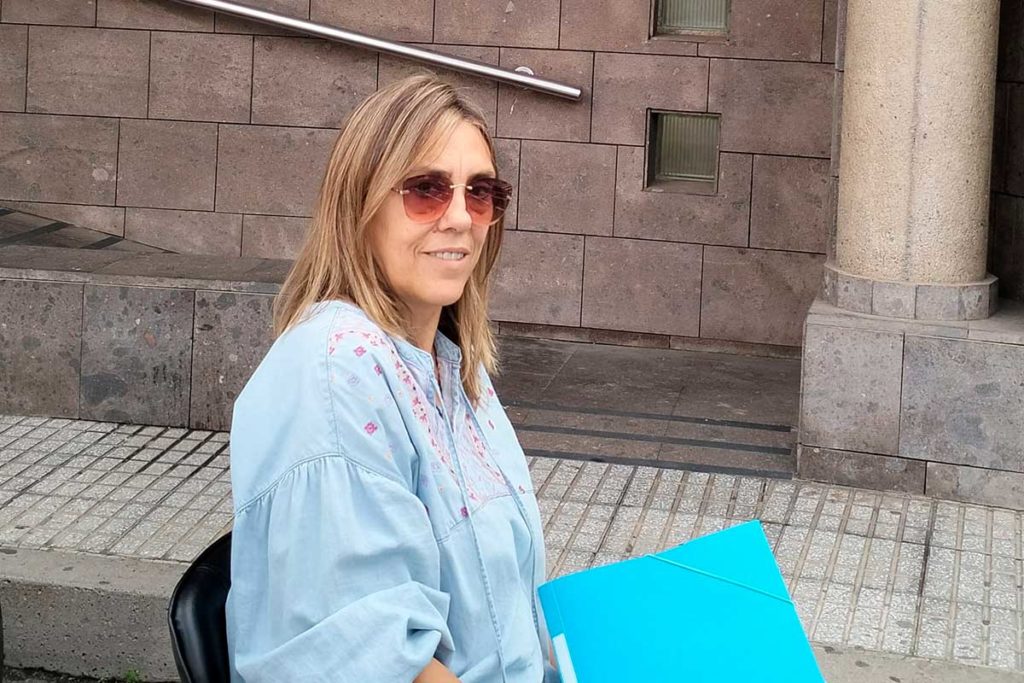
Tenerife Resident Sues Güímar Council Over Lack of Accessibility at Municipal Pool
A resident of Güímar, Tenerife, has taken legal action against the local council after the municipal pool’s failure to provide private and accessible changing facilities hindered her medically necessary swimming routine.
Universal accessibility in public spaces is more than just a legal requirement; it is essential for ensuring the dignity and independence of people with disabilities. A recent case in Güímar, Tenerife, reported by El Día, highlights the frustrating gap between the law and the reality faced by those who rely on accessible facilities for their health.
Mar Mendizábal, a 57-year-old resident with a 68% disability due to Sudeck’s syndrome, has taken legal action against the local council after ten months of failed attempts to resolve the issue through municipal departments and the Ombudsman. Mendizábal argues that the Tasagaya municipal pool fails to protect her privacy. The changing room for people with reduced mobility lacks private cubicles or proper enclosures, forcing her to expose herself to others while changing—a situation she describes as a violation of her basic right to privacy.
Beyond the lack of privacy, the facility has technical flaws that prevent her from using it independently. These include a wooden partition that blocks her electric wheelchair, a lack of door latches, and an unstable transfer bench. For Mendizábal, swimming is not a hobby; it is a medical necessity prescribed to strengthen her lower body and manage the acute pain caused by her condition.
The issue was recently raised at a municipal council meeting. Carlos Llarena, the Councilor for Sports, apologized and acknowledged the problem. He explained that although initial technical reports suggested the facility met regulations, the contractor failed to carry out the necessary improvements. The City Council has promised to replace the changing room door immediately, but other requested changes—such as reconfiguring the interior and installing private cubicles—remain unresolved.
This case serves as a reminder of the invisible barriers that still exist in public infrastructure. Mendizábal filed a formal complaint with the Court of Güímar on November 20th, emphasizing that accessibility is a human right that should not be sidelined by bureaucracy or poor contractor performance. As the legal process moves forward, she continues to advocate for empathy as the foundation of any public policy aimed at true equality.