
Tenerife Reservoirs Surge, Drought Emergency Review Looms
Water levels in Tenerife's Balten reservoirs have significantly increased by 14% to 66.1% capacity, potentially leading to the lifting of the drought emergency, though authorities remain cautious, pending infrastructure completion.
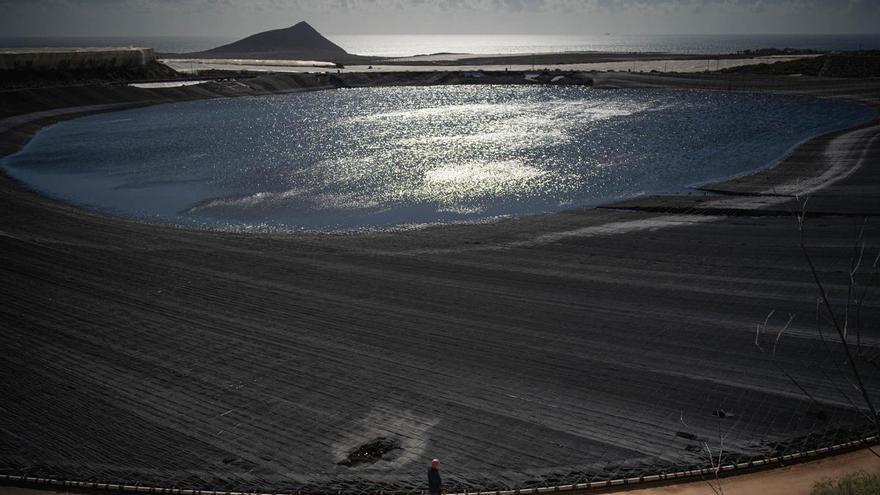
Water reservoirs managed by the public company Balten (Balsas de Tenerife) have seen a significant rise in their water levels. This could lead to the lifting of the drought emergency, which was declared in May 2024. Recent figures show that the 21 reservoirs on the island saw a 14% increase in water volume in January compared to December. This added an extra 726,583 cubic meters of water.
This boost in water levels is due to rain at the end of last year and the start of this year, along with a wet spring in 2025. By January 31, the reservoirs were 66.1% full, holding 3.3 million cubic meters of water. By early February, the volume was 3,332,419 cubic meters, which is 44% of the total capacity (5,043,037 cubic meters). This marks an increase of 726,000 cubic meters and 14 percentage points compared to January 1, 2026. The improvement is even greater when looking at the year-on-year figures: water levels are up by 1,118,812 cubic meters (20% more) compared to February 1, 2025.
Looking at how the water is distributed, there are differences across the island. Reservoirs in northern Tenerife are 62.9% full, holding 2,159,482 cubic meters. Notably, Valle Molina (Tegueste), San Antonio (La Matanza), and Teno Alto (Buenavista del Norte) are completely full. The southern part of the island has an even higher storage volume, reaching 73.1% of its capacity (1,172,937 cubic meters). This is partly due to the use of recycled water. In the south, El Saltadero (Granadilla de Abona) is 95.1% full, and Lomo del Balo (Guía de Isora) is 93.4% full.
Despite these positive figures, the Tenerife Island Council (Cabildo de Tenerife) remains cautious. Its president, Rosa Dávila, explained that lifting the water emergency can't just depend on rainfall, no matter how good it is. The condition of the island's water infrastructure must also be taken into account. The Council says that the emergency decree, which ends on February 28, will only be suspended once these infrastructure projects are finished and working. They are described as "practically concluded."
The drought committee will be responsible for reviewing the situation and deciding whether to continue or lift the emergency. While a meeting is expected soon, no date has been set yet. The Cabildo highlighted key infrastructure projects designed to treat much of the water currently released into the sea, so it can be used for farming. For instance, they mentioned a wastewater treatment plant previously unused by Cepsa, which is now available to the Cabildo and is crucial for water treatment in the south.