
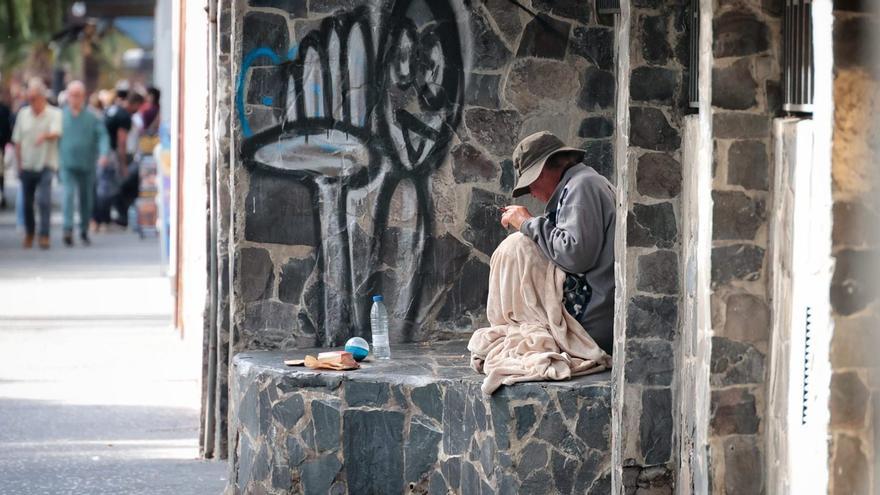
Tenerife Report Highlights Deep-Rooted Homelessness and Housing Crisis
A new report from the Tenerife Island Council and Cáritas Diocesana reveals that homelessness has become a deep-rooted structural crisis affecting 2,853 people, prompting calls for a comprehensive public health approach to address the issue.
The housing crisis in the Canary Islands has reached a critical stage, according to a new report on homelessness from the Tenerife Island Council and Cáritas Diocesana. The study identifies 2,853 people experiencing homelessness on the island. While this is only a slight increase from the 2,838 recorded previously, it confirms that homelessness has become a deep-rooted, structural issue that goes far beyond a simple lack of shelter.
The report highlights that homelessness in Tenerife is a complex problem driven by several converging factors: broken family ties, ongoing struggles in the job market, and significant barriers to finding affordable housing. The authors also emphasize a major public health concern, noting that many individuals suffer from mental health issues, depression, and anxiety. Without consistent therapeutic support, these conditions make it increasingly difficult for people to reintegrate into society.
In response, local authorities are rethinking their approach. Cáritas Diocesana is urging officials to treat homelessness not just as a social emergency, but as a public health crisis that requires long-term, comprehensive care. Meanwhile, the Tenerife Island Council, through the Institute for Social and Socio-sanitary Care (IASS), is calling for better coordination. Their goal is to bridge the gap between local municipalities—which handle direct, day-to-day care—and the various organizations working in the field.
Despite these efforts to create a unified strategy, the report underscores the difficulty of reversing a trend that continues to affect nearly 3,000 people. Because the crisis ranges from people sleeping on the streets to those living in unsafe, substandard housing, the authors argue that a fundamental overhaul of the island’s support networks and housing resources is urgently needed.