
Tenerife Reopens Eco-Homes for Rent, Scientific Research
Tenerife's unique "Bioclimatic Houses," an internationally recognized sustainable architecture research lab, are reopening for rent after a five-year closure, inviting guests to contribute to ongoing studies on eco-friendly building designs.
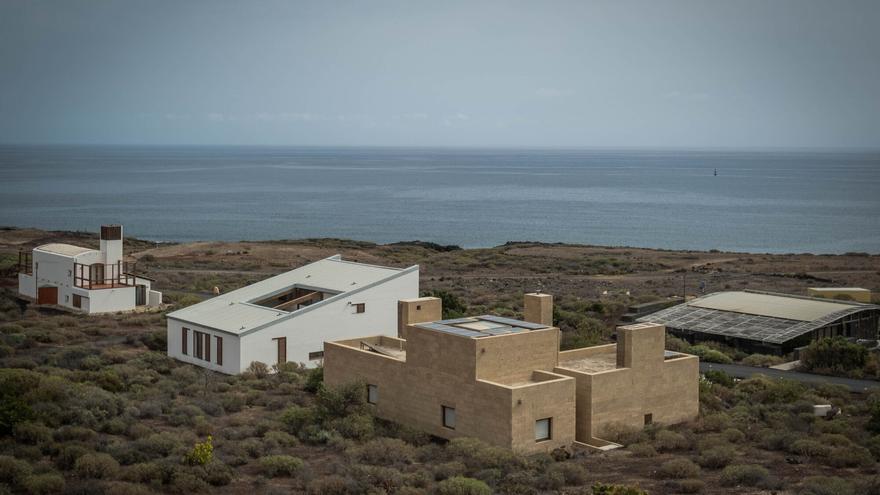
You can now rent a unique, eco-friendly house on Tenerife's south coast. These homes offer stunning sea views, are very close to the beach, and are part of a modern, sustainable community. Imagine living in a sunny, natural setting surrounded by wind turbines, solar panels, native plants like tabaibas and cardones, and dramatic volcanic landscapes.
The houses themselves are spacious and naturally cool, thanks to advanced insulation. There's a catch, though: those who stay here will be part of a scientific experiment. Sensors throughout the homes constantly measure indoor and outdoor conditions, helping researchers study sustainable building designs.
This initiative is led by the Technological and Renewable Energies Institute (ITER), an organization linked to the Tenerife government. ITER recently signed a deal with four companies to manage these "Bioclimatic Houses." These homes are more than just rentals; they're an internationally recognized research lab for energy efficiency.
The four companies – ACC, Jardines de Franchi, Raider Ppal, and Gupipu – will market these 24 houses, which are located on ITER's property in Granadilla, mainly for short stays. These companies will pay ITER a fixed fee of 65,000 euros every three months, along with a variable fee based on how often the houses are occupied.
This new arrangement allows ITER, the island's hub for technology and renewable energy, to reopen the homes. They had been closed for five years due to administrative issues with their previous public management.
The reopening means ITER can restart its important research into sustainable architecture, which began when the houses first opened in 2010. The homes need to be occupied to collect vital data and for their general upkeep.
With space for 119 people in total, these houses will gradually become fully operational again over the next few months. This will bring back to life one of ITER's most iconic and unique facilities. Each home has a distinct and unusual design, and they are officially recognized as "Emblematic Houses of Scientific Interest," blending accommodation with scientific research.
Juan José Martínez, the Cabildo's Minister of Innovation, explained that "every stay is designed as a live research experience. Guests indirectly help with studies on how comfortable the indoor temperature is, how much energy is used, and how different materials and eco-friendly designs perform."
María Delgado, who leads ITER's Sustainable Architecture department, added that sensors constantly monitor these properties, measuring things like temperature, humidity, and gases such as carbon dioxide.
Delgado noted that "the design solutions are actually quite simple. They connect the building's orientation to the sun's path, wind patterns, and other natural factors. The homes are built to insulate against the climate and encourage natural airflow."
This experimental project began in 1995 with an international architecture competition. Since the houses opened 15 years ago, they have been part of a truly unique global initiative.
Beyond their excellent insulation, each of the 24 houses can generate its own clean energy using solar photovoltaic and thermal systems. This makes the entire complex self-sufficient and environmentally friendly.
Each home is uniquely designed to suit the local climate, reducing the need for air conditioning and making the most of natural resources. So, while they offer accommodation, these houses also serve as an active research platform where daily use and new sustainable technologies are constantly monitored.
The news about these special homes reopening was shared during ITER's 35th-anniversary celebrations. At the main event last Thursday, technical director Carlos Suárez announced the contract with the four companies. These companies will now prepare, market, and maintain the houses – which have been closed for five years – allowing the Sustainable Architecture department to restart its bioclimatic experiments.
The designs vary greatly: some houses are rounded, others rectangular. One even looks like an aircraft hangar, and another resembles a star when viewed from above. María Delgado highlighted the roofs as a key distinguishing feature. She explained, "Roofs are often overlooked in construction, but they are crucial for creating comfortable living conditions. Here, we're testing various roof designs to find the best ones for sustainable buildings."
In fact, this complex on the Granadilla coast is home to several research projects focused on roofs. One notable project, 'Renaturmac,' involves "monitored demonstrator green infrastructure," which uses plants not just on roofs but also in vertical gardens and other innovative materials to assess their effect on comfort and energy efficiency.
Another project, 'Cambios,' uses the houses to test and confirm environmental monitoring systems. These systems will later be applied in cities on islands like Cape Verde and São Tomé and Príncipe, which share similar characteristics with the Canary Islands.