
Tenerife Ports Pivot to Renewable Energy and Infrastructure Expansion Following Crisis Success
Tenerife’s Port Authority is modernizing its facilities in Santa Cruz and Granadilla to establish the islands as a renewable energy hub and a key center for maritime repair services.
The recent health crisis involving the Hondius cruise ship has showcased the efficiency of Tenerife’s port infrastructure and the expertise of its emergency teams on an international stage. While the ship’s arrival sparked political debate, the incident has also accelerated plans to modernize the ports of Santa Cruz and Granadilla, shifting their focus toward energy diversification and specialized industry.
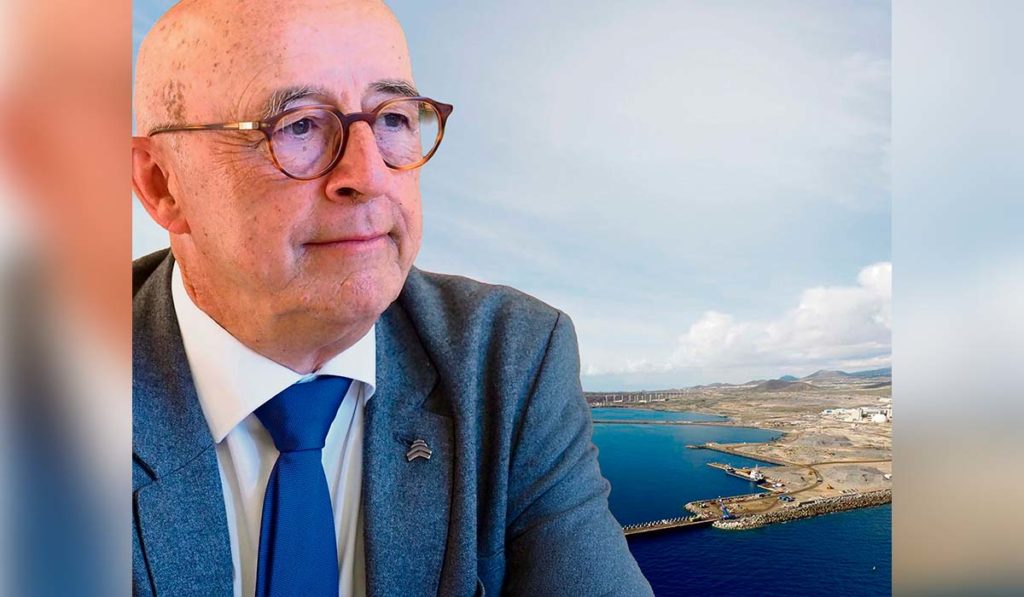
Pedro Suárez, president of the Port Authority, highlighted the port of Granadilla as the centerpiece of this transformation. With 60% of its space already under concession, the port aims to become a renewable energy hub. Plans include integrating biogas plants and systems for liquefied natural gas (LNG) to meet the rising demand for clean fuel. To support this growth, the port is working to acquire an additional one million square meters of land, attracting global investors who see the Canary Islands as a key maritime hub.
Meanwhile, the port in the capital, Santa Cruz, is undergoing a reorganization to improve efficiency and its relationship with the city. Logistics operations are being moved to the Dique del Este and Cueva Bermeja, where 100,000 square meters of new space will be developed. This area will host essential infrastructure, including a natural gas-powered thermal station and a floating dry dock for ship repairs. The dry dock, set to open later this year, is expected to boost the local repair industry and create skilled jobs through training partnerships with organizations like Femete.
The Port Authority maintains that the Hondius incident proved the effectiveness of its safety and health protocols. Despite tensions regarding the ship's docking, the operation successfully repatriated 94 passengers. This event, occurring alongside the arrival of migrants in Los Cristianos, has sparked discussions about regional solidarity. In response to criticism, port officials have defended their staff, emphasizing the vital, often unseen work done by professionals to keep operations running during complex emergencies.
Looking ahead, the port is preparing for major events, such as the upcoming papal visit, while balancing its commercial role with its social responsibilities. By investing in LNG and modernizing ship repair services, the Port Authority aims to ensure that the archipelago remains a vital player in Atlantic shipping, regardless of shifts in the global energy market.