
Tenerife Ports Maintain Second-Place Ranking as Cruise Tourism Surges
The Port Authority of Santa Cruz de Tenerife remains Spain's second-largest passenger hub, bolstered by a surge in cruise tourism and national leadership in vehicle transport despite a decline in inter-island ferry traffic.
The latest semi-annual report from the Port Authority of Santa Cruz de Tenerife confirms that the island’s ports remain the second most important passenger hub in Spain, trailing only the Balearic Islands. This success is driven by a shift in how people travel: while regular inter-island ferry traffic has slowed, a surge in cruise tourism has kept overall passenger numbers high, reaching 3.6 million.
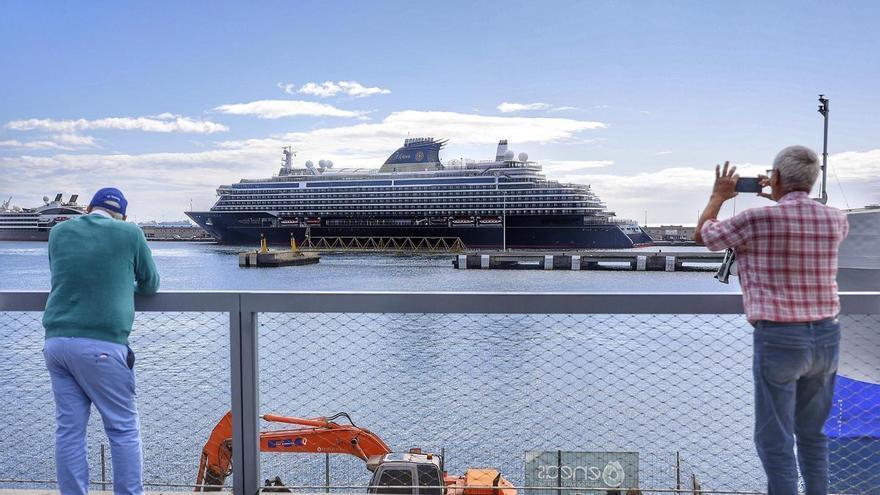
The data shows a 3.2% dip in inter-island travel, amounting to 87,000 fewer passengers than the previous year. However, this was offset by a 10.3% rise in cruise passengers, who totaled one million. The port of Santa Cruz de Tenerife specifically saw an 8.45% increase in cruise activity, supported by 424 ship dockings—a 6.3% rise—with an average of 2,359 passengers per vessel.
Beyond passenger travel, the port is a major player in maritime supply services. It now ranks fourth nationally for vessel provisioning, supplying 533,845 tons of goods—mostly fuel—and capturing 9.4% of the state market. This performance stands in contrast to general cargo, which fell by 6% to 4.3 million tons, while container traffic held steady, keeping the port in fifth place nationally with 141,700 units.
The port also leads the country in vehicle transport. With 857,813 vehicles handled in the first half of the year, Tenerife’s ports manage 28.6% of all such traffic in Spain. This highlights how vital maritime links are for the region’s vehicle fleet, a factor that, alongside the booming cruise industry, defines the port’s current competitive strength.