
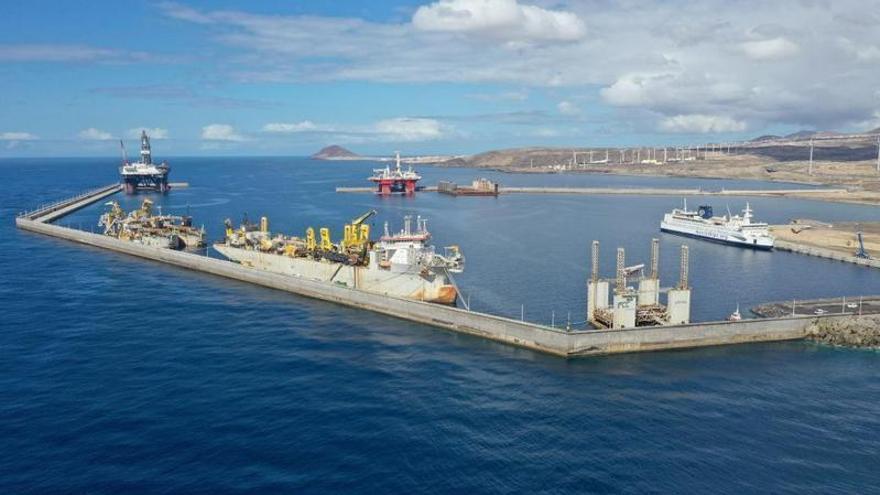
Tenerife Port Workers Protest Regulatory Uncertainty Over Vessel Departure
Tenerife port workers are protesting outside the Canary Islands Government headquarters to demand clearer regulations after the expiration of a permit forced the departure of the Petrojarl I vessel, threatening the island's industrial competitiveness.
Uncertainty over regulations at the Port of Granadilla has sparked concern across Tenerife’s industrial sector. Labor groups are protesting the upcoming departure of the Petrojarl I, a floating production and storage vessel, which must leave because its administrative permit has expired. This has highlighted growing frustration over the island’s struggle to keep complex technical projects. To demand a clearer legal framework that supports industrial competitiveness, port workers have organized a demonstration this Tuesday from 12:00 p.m. to 2:00 p.m. outside the Canary Islands Government headquarters in Santa Cruz.
The issue goes beyond a single ship repair project. Because the Petrojarl I requires a wide range of specialized services—from engineering and mechanics to logistics—its departure puts Tenerife at a strategic disadvantage. Workers warn that losing this project not only means an immediate loss of work but also creates an image of instability that could discourage future international clients. In a global market where Atlantic ports compete to service offshore wind and oil platforms, the sector feels that a lack of clear government policy is holding back economic growth.
Organizers emphasize that these industrial operations provide a vital boost to the island’s local economy, supporting everything from specialized workshops and transport to catering and hospitality. The protest is not just about one contract; it is a call for a port policy that prioritizes industrial specialization. Protesters argue that Tenerife has the infrastructure to lead in this market, provided the government creates a stable environment where companies can compete fairly with international rivals.
This mobilization serves as a wake-up call to authorities, highlighting the urgent need for a strategy that balances industrial activity with safety and environmental standards. For those involved, losing this project would be a major setback to Tenerife’s goal of becoming a leading hub for offshore logistics and repairs—a sector where long-term planning and regulatory reliability are essential to attracting investment.